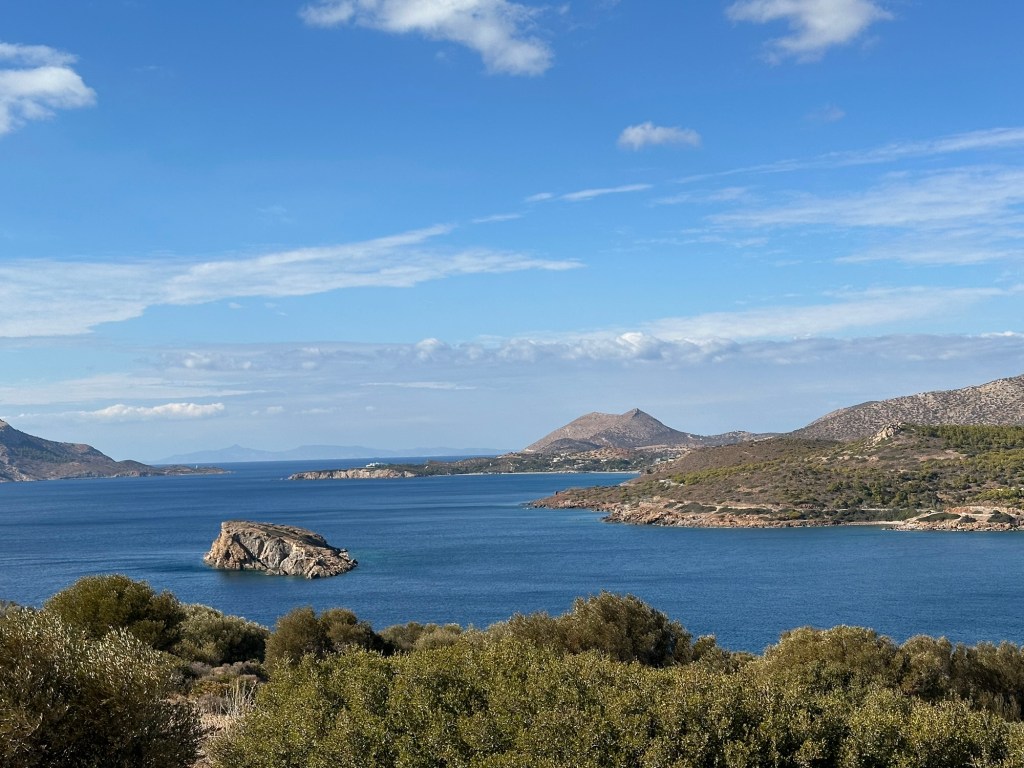
We made a trip to Athens in November and were blessed with absolutely perfect weather for the five days we were there. Temperatures hovered in the mid to high 60’s during the day and mid 40’s at night. Skies were generally clear. Athens was ripe for exploring and we had the curiosity to learn…about Athena, Zeus, Dionysios, and a host of other immortals and mortals. This was to be an exploration of an ancient civilization and a course in Greek classics. However, it proved to be much more difficult than that…people have spent a lifetime studying the classics and have only garnered a fraction of what there is to learn. So, with some photos that we took I’ll try to interject a few interesting facts.

Cosmogony is the eternal question of origin, of the beginning of beings. Long story very short, creation began with Chaos, “a shapeless blurred material which defines that nothing begins from nothingness.” Ok! Gonna take me a while to break that down..
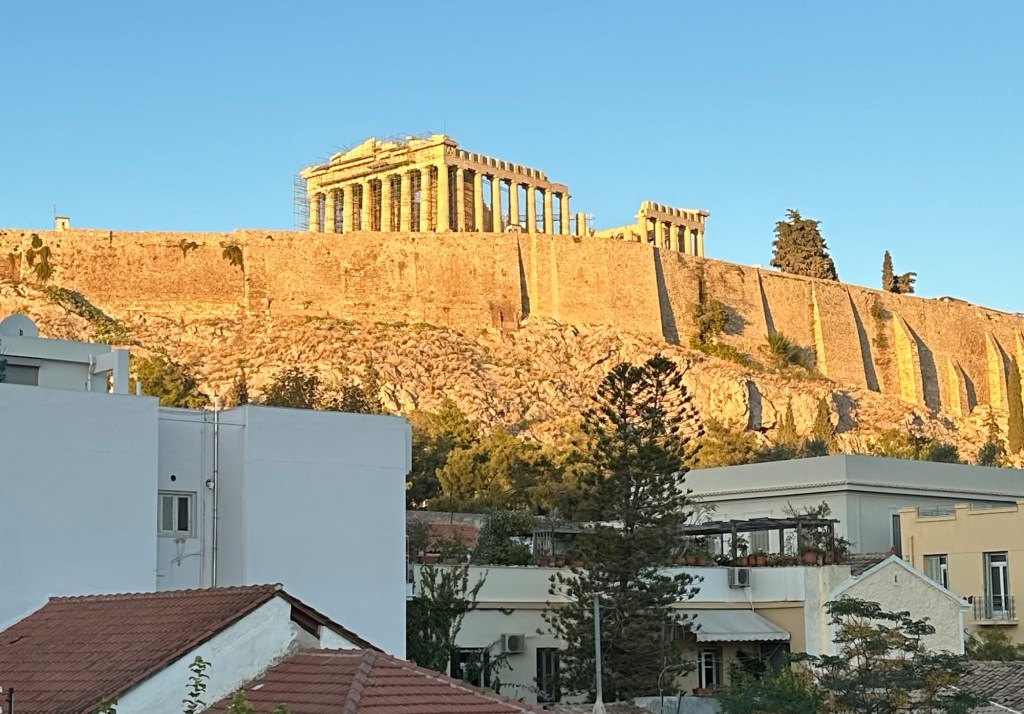
Jan’s son Andy found this apartment on one of the travel sites. Huge find.
The Acropolis is by far the main attraction in Athens. During the Golden Age of Athens in late 5th century BCE, there were built a number of temples on the “Sacred Rock”, most of them dedicated to Athena, the patron Goddess of Athens. She was the daughter of Zeus, the supreme God of Gods, and she would become a virgin warrior, Goddess of wisdom and crafts as well as Goddess of weaving.
Athenian Legend: Papa Zeus was advised that his pregnant mistress, Metis, would have a son who would eventually fight him for control of Olympus and the rest of the world. Not wanting this to happen, he swallowed Metis whole, something his father had done as well with a number of his just born children. The unborn child continued to grow inside the head of Zeus, and after nine months Hephaistos (more on him later) cracked the head of Zeus open and out came the fully grown Goddess Athena in complete armor. She would become Zeus’ favorite child.

Not much remains of these once magnificent temples, but it isn’t hard to imagine a scene of huge columns holding up the temples honoring gods and goddesses replete with statues and sculptures, homage for refuge, religion and royalty.

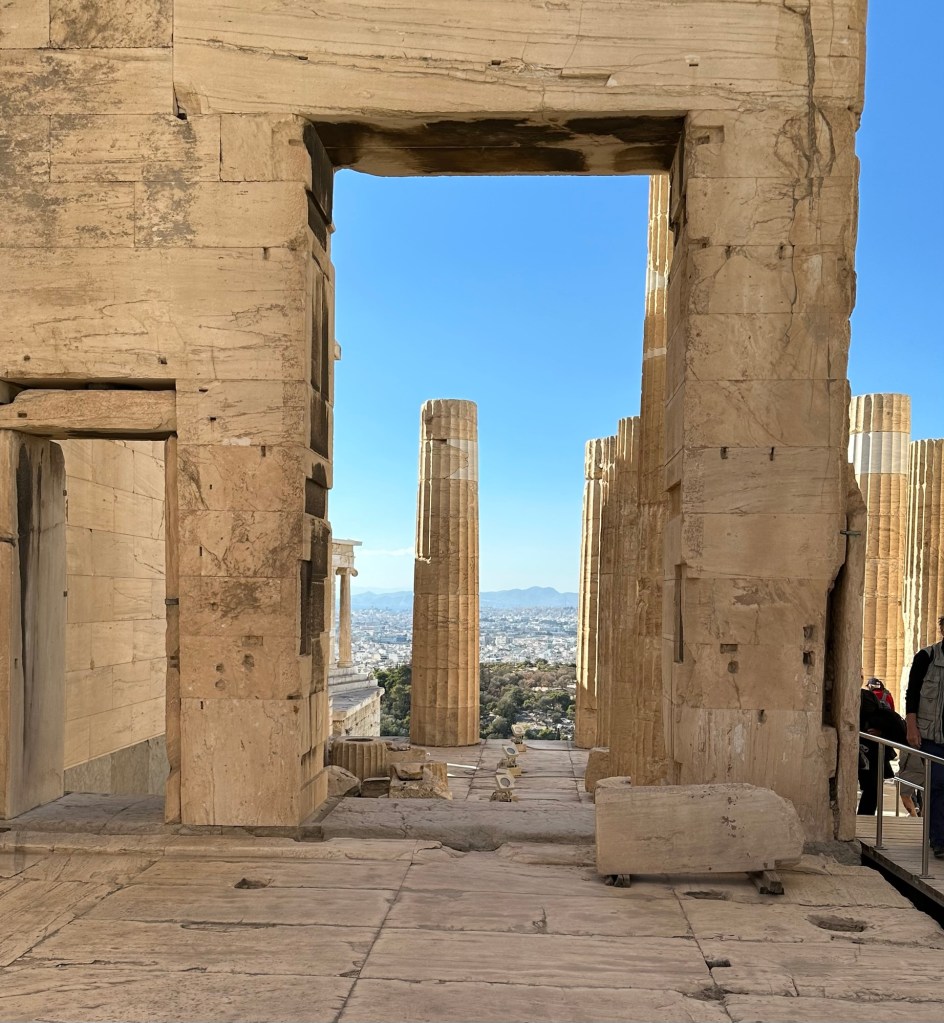
Now, I’m getting confused, as shit. Let’s go back and briefly revisit the result of Chaos springing from nothingness …Greek mythology states that Chaos (void) was one of the primordial Gods, the very first deities that existed before everything, who along with Thalassa (Sea), Gaia (Earth), Uranus (Sky), Tartarus (Underworld) helped the Ancient Greeks understand the creation of the universe. These primordial deities gave way to the Titan Gods, the second generation of Greek gods. There were twelve of these people who jointly edged an ancient civilization towards a better understanding of time, light, the oceans , the sky and more. Cronus was the leader of the Titans who tried to kill his children so they wouldn’t take over control of the world. They obviously were not on board with his actions and launched a successful war which led to the rise of the third generation of Greek gods and the most famous. – the Olympians. And the subject of most of the characters referenced later on..

Legend: One of the most sacred spaces on the Acropolis, the Erechtheion was built to honor both Athena and Poseidon, God of the Waters and the Sea, and her uncle. Athena was the daughter of Zeus and Metis, and she is known as the Goddess of Wisdom and the patroness of Athens, a title she earned in an infamous showdown with her uncle Poseidon for bragging rights to have the city named for the victor. Legend says that the two would offer a present to the townspeople and whichever one the Gods decided was most beneficial would earn the right to have the name of the town…Poseidon, the God of the Waters and the Sea, struck a blow with his Trident on the rock of the Erechtheion and instantly water flowed. Pretty neat trick but the water was rather brackish and had a hint of saltiness. Athena, sensing an opening, dropped a seed in the traces of Poseidon’s trident from which sprang the first olive tree in the world. Hands down the winner.

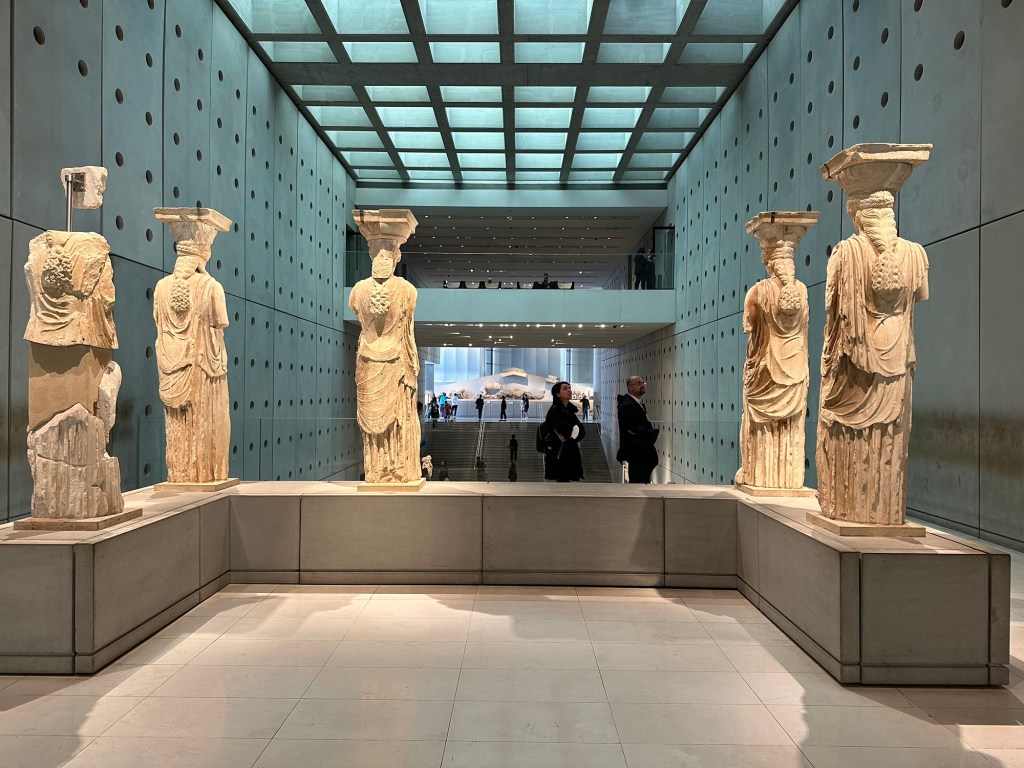
The most famous architectural feature of the Erechtheion is the south portico, the porch of the Korai, or more recently (Roman times) as porch of the Karyatids. It was named for the beautiful maidens of the city of Laconia who performed dancing rituals in honor of the Goddess Artemis. These six elegant women support the ceiling of the portico. More on Artemis to follow.
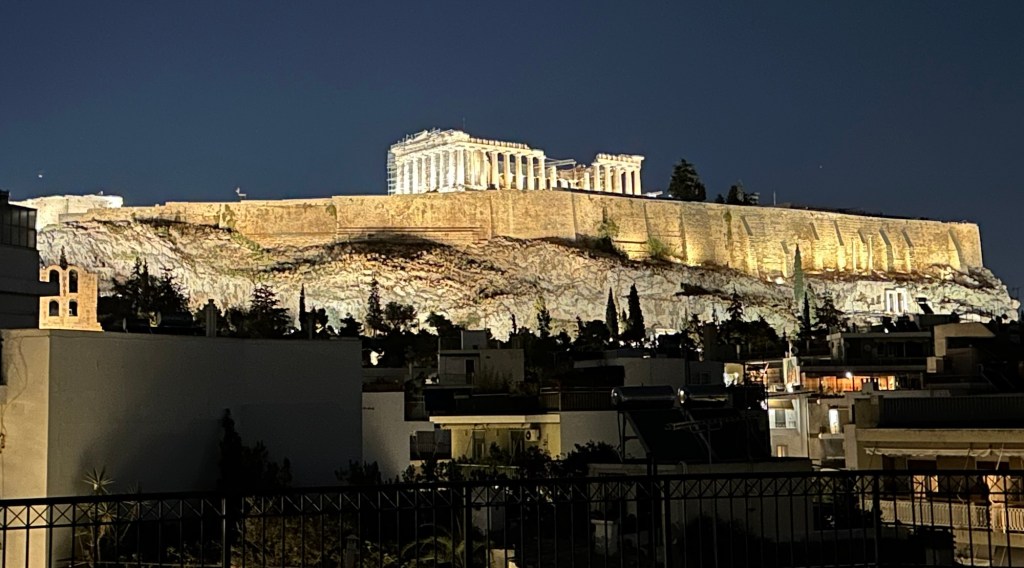

The Parthenon stands as the epitome of ancient Classical Greek art. It sits at the top of “the rock”, a monumental temple dedicated to Athena and once dominated by a statue of the Goddess…standing ten meters (some 36 feet) high, with a core of wood to which were affixed pieces of ivory which symbolized her flesh, and a layer of gold which represented her clothes, helmet and weapons. Athena Pallas was the main gal, Athena Nike, immortalized in a smaller temple below the Parthenon, was an important part of the court of Zeus and was considered the Goddess of victory.

Below the Acropolis lies the community of Plaka, where the heart of ancient Athens is found. The Ancient Agora, the Roman Forum, museums, restaurants, parks and small residential areas populate the area where Socrates and Aristophanes held court in ancient times. The above church is dedicated to St Georgios, a martyr executed in the fourth century for refusing the orders of Diocletian to persecute Christians.
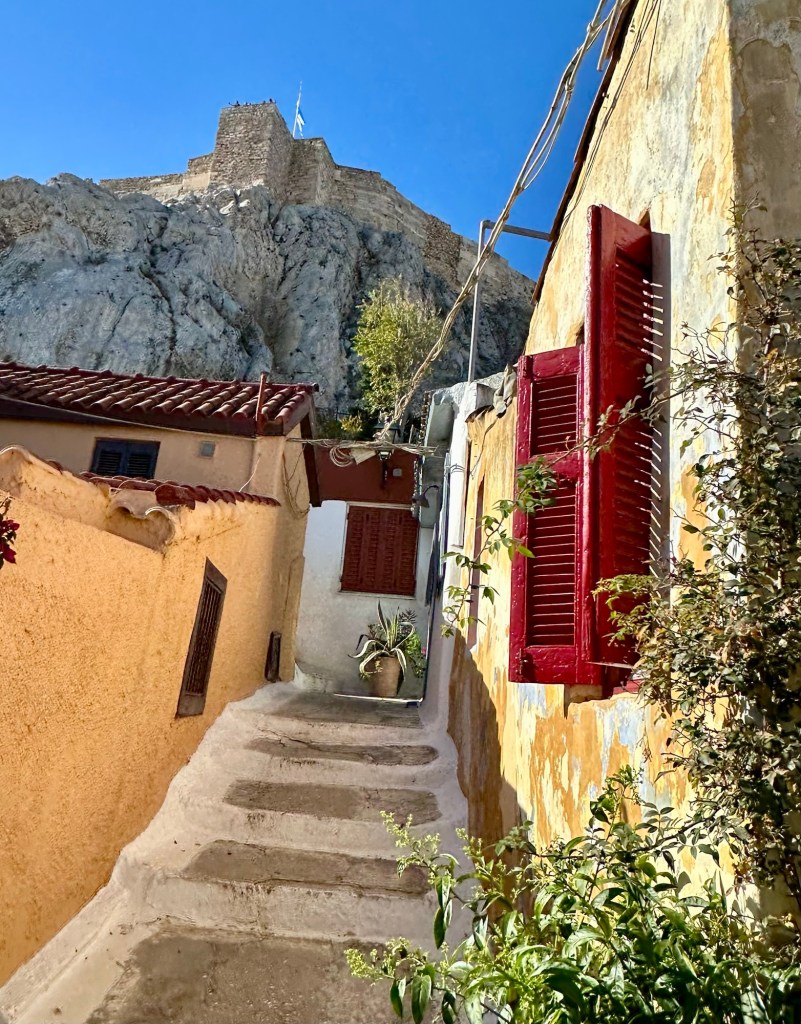


The church, built hard up against the base of the Acroplois, is located in the neighborhood of Anafiotika, a delightful and unique collection of whitewashed and blue painted homes surrounded by bougainvillea and a sizeable collection of cats, and steep steps that lead to the heart of Athens, the Plaka district.
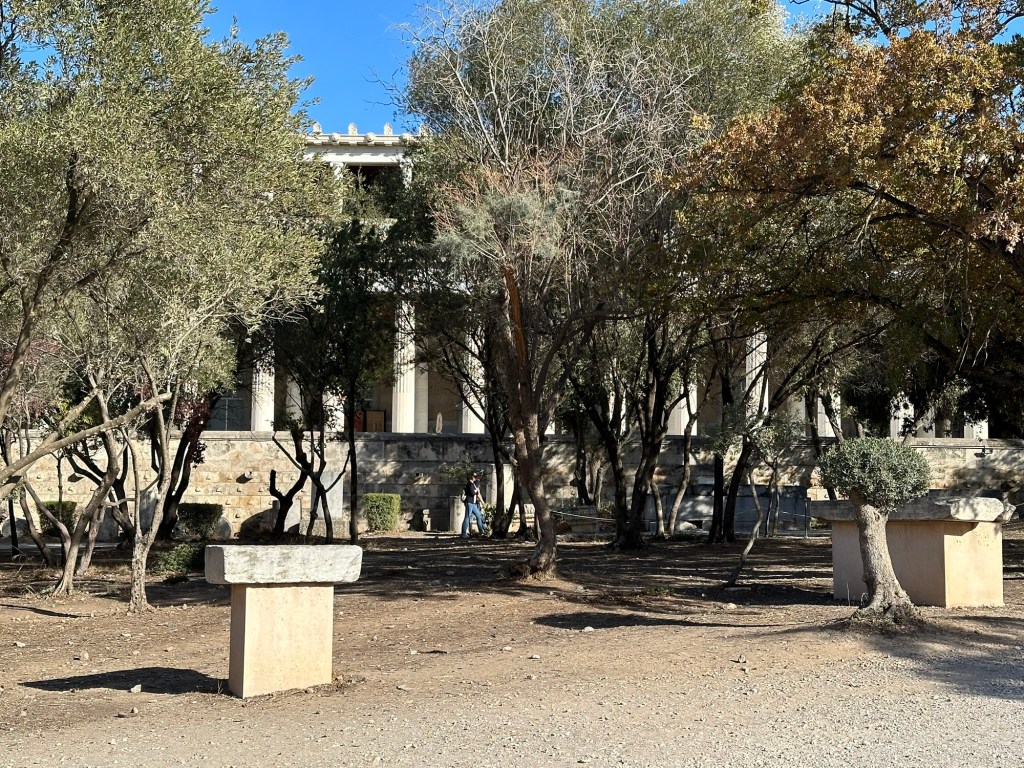
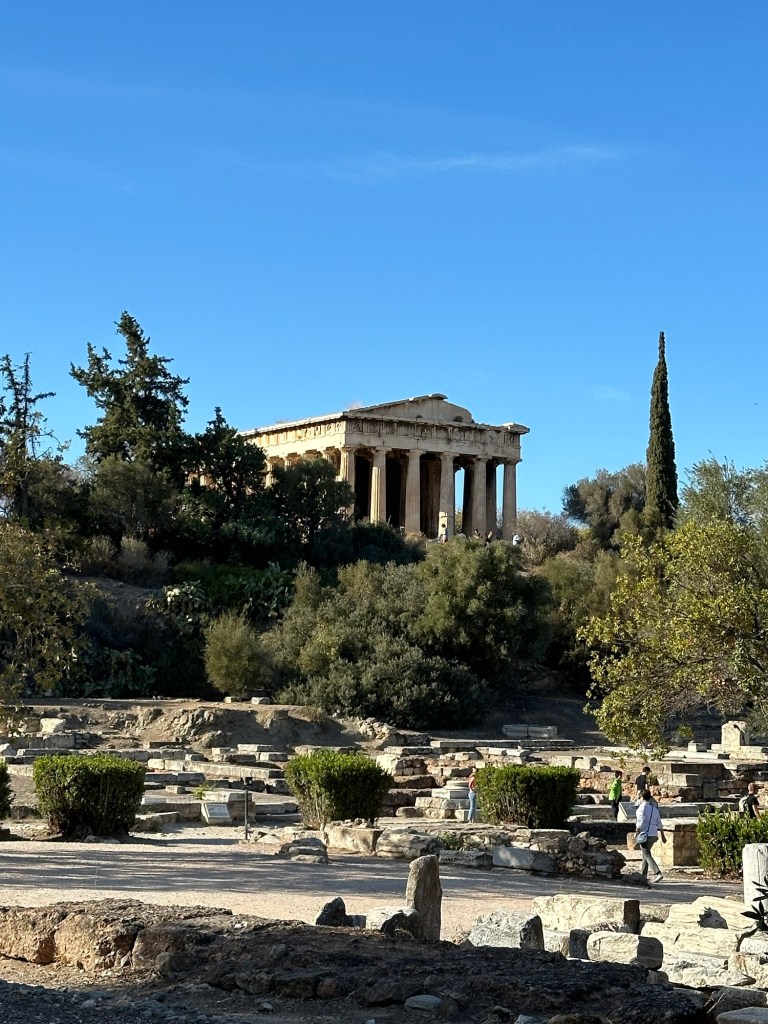
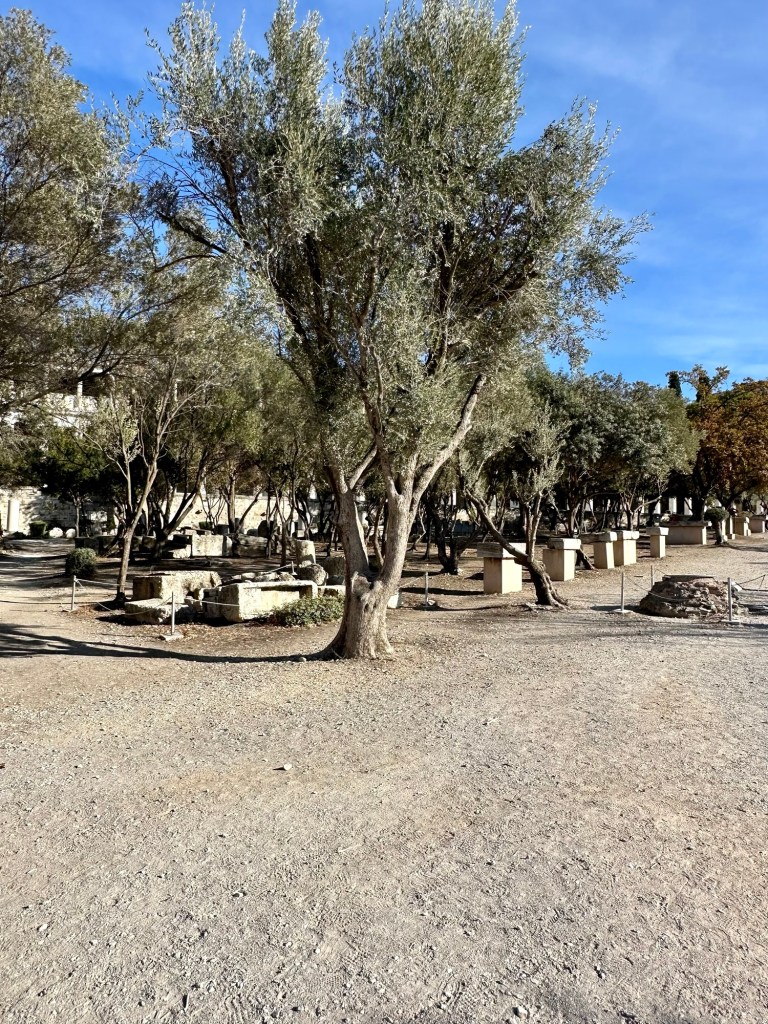
The picture in the center is the temple of Hephaistos, son of Zeus and his “lawful wedded wife and sister” Hera. By birth he is also the brother of Athena, Artemis, Apollo, and a host of other mythical gods. Known as the Master Craftsmen of the Gods, he was responsible for the development of armory on Mt Olympus – the arrows of Artemis and Apollo, the sceptre of Zeus, the shield of Achilles, and to a lesser known God, Perseus, the scythe with which he decapitated the head of Medusa. The temple was also dedicated jointly to Athena – it was Hephaistos who cracked open the head of Zeus which allowed Athena to emerge as a grown Goddess. Later Hephaistos would fall in love with Athena, alas to no avail as she wanted nothing to do with him. Legend and myth has it that Athena repulsed the advances of Hephaistos during a rape effort, who succeeded only in spilling his seed upon her thigh which subsequently fell to the ground, and from which sprang a child who would later become the king of Athens – Erichthonios. “And the circle is unbroken…” While trying to get out of this rabbit hole of Greek history, I found that Hephaistos was not only a master of metallurgy, but also a master of living creatures. Using water and earth he moulded the first woman and gave her beauty and a voice – Pandora.


Under the aegis of the Romans, Greece continued to prosper and there was little enmity between the two. The Roman forum became the new marketplace and center of all social, religious and political life. The emperor Hadrian had offices here, monuments to Athena were erected, and the open-air market was bordered by tall columns and housed many shops and stalls.
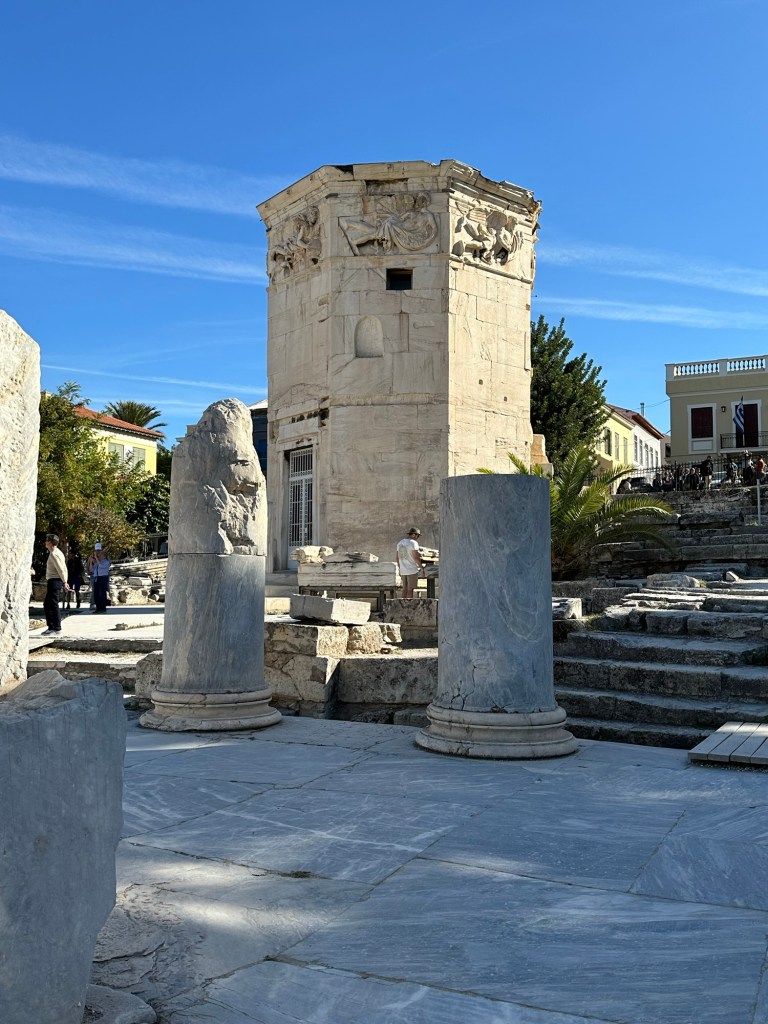
The most well-known building still standing in the Roman Forum in a rather intact state is the Tower of the Winds, built in 50 BCE while Julius Caesar was ruler of the Roman Empire. Octagonal in shape and built on a three steppe foundation of Pentelic marble (top O’ the line), the Tower of the Winds is considered to be the world’s first weather station. At the top of each panel of the building are personifications of the eight Gods who are attributed with the eight winds that blow, and at the top of the roof was a vane in the form of a Triton whose staff pointed to the personification of that particular wind direction: Boreas (N), Kaikias (NE), Apeliotes (E), Eurus (SE), Notus (S), Livas (SW), Zephyrus (W), and Skiron (NW). Inside the building was a hydraulic water clock that functioned with water supplied from the Acropolis. Pretty neat stuff considering that it was created some 2000 years ago.


At the base of the Acropolis, rites to Dionysos, god of wine and revelry, were held each year in the spring. These events are traced back to 1200-600 BCE and evolved into the origins of classical Greek theater and song. You can let your imagination run as these rites led to orgies, feasts and “the ingestion of herbs that led to wild ecstasies.” The evolution of classic theater and music during these times gave us Thespis (the first thespian), Aeschylus (the first playwright) and Sophocles who beat Aeschylus in a drama competition in 468 BCE. And there are many more, among them Aristophanes, Euripedes and Menander who also helped enthrall ancient Athenians and today serve as the focus of many college curriculums.
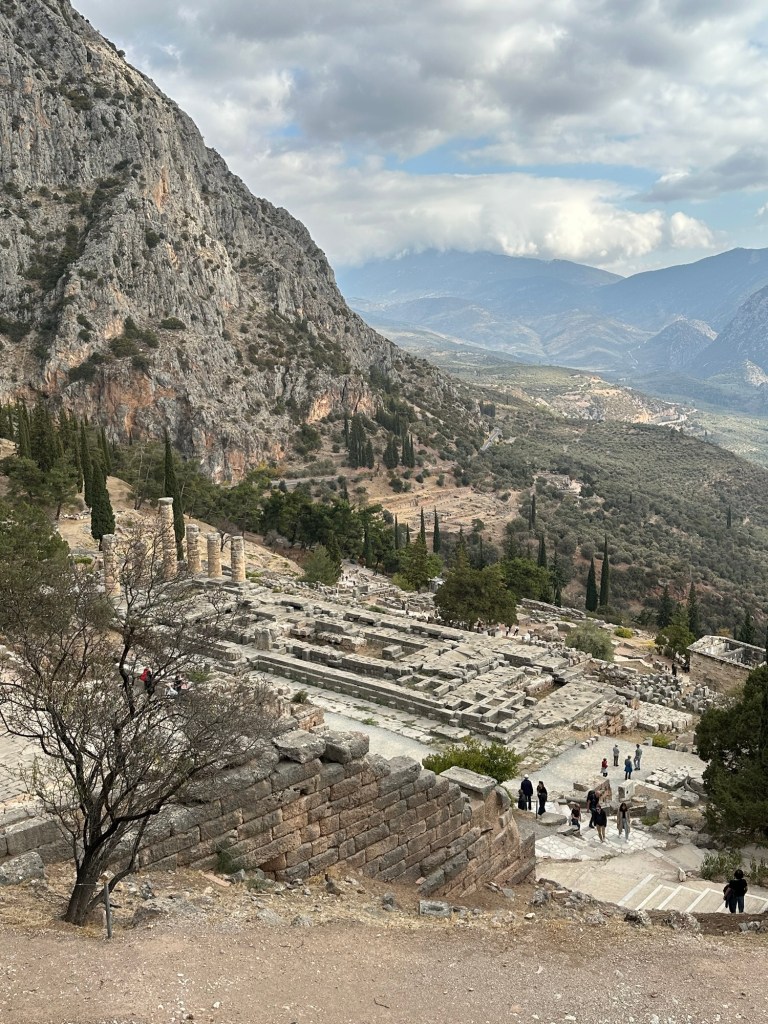
Some two and a half hours north of Athens, towering over the plains of Crisa and in the shadows of Mt Parnassus, is the city of Delphi, considered the center of the universe…Greek mythology has it that Zeus set flight to two eagles from opposite sides of the world and ordained that where the two met would be forever the center of the world and the universe.

Apollo, the God of just about everything, was the child of Zeus and one of his legion of mistresses, Leto. Her pregnancy was a rocky one, Leto having been banished in a fit of jealousy by Herta (wife and sister) of Zeus. Her travels to find a safe haven away from the anger of Herta took her to the island of Delos where she gave birth first to Artemis, who in turn, became the midwife for the birth of Apollo, her brother, the next day. Apollo, the God of Light, the Arts, and Prophesy, decided he would honor his father, Zeus, by showing humanity his intentions to the world. To do that he would travel to Delphi, already the center of the universe, and take over the oracle of Delphi which was then controlled by Gaia, Mother Earth. To do so, Apollo had to slay the dragon/snake Python which controlled the oracle at the time.
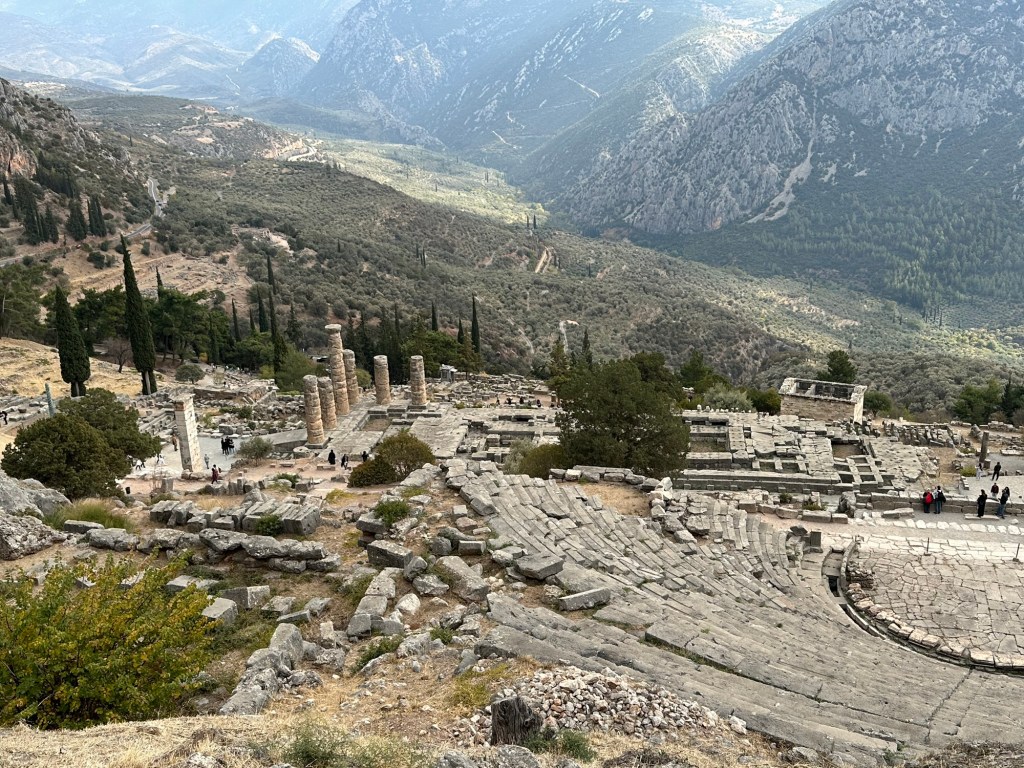
“The communication of divine knowledge from god to mortal, also known as divination, played a major role in ancient Greek religion. Divination took many forms, from the study of sacrificial entrails to the interpretation of the flight of birds. But perhaps the most important form of divination was the practice of consultation of a god through an intermediary. This intermediary was known as an oracle.” Apollo’s oracle, Pythia, helped to establish the Oracle at Delphi as the best of all oracles. She was a woman of the fields, unblemished and committed, of a wealthy family, and all the priestesses that followed her were of the same heritage. Apollo was recognized the world over as the god of archery, music and dance, truth and prophecy, healing and disease – all helping the Oracle at Delphi to become the most important oracle in the world.
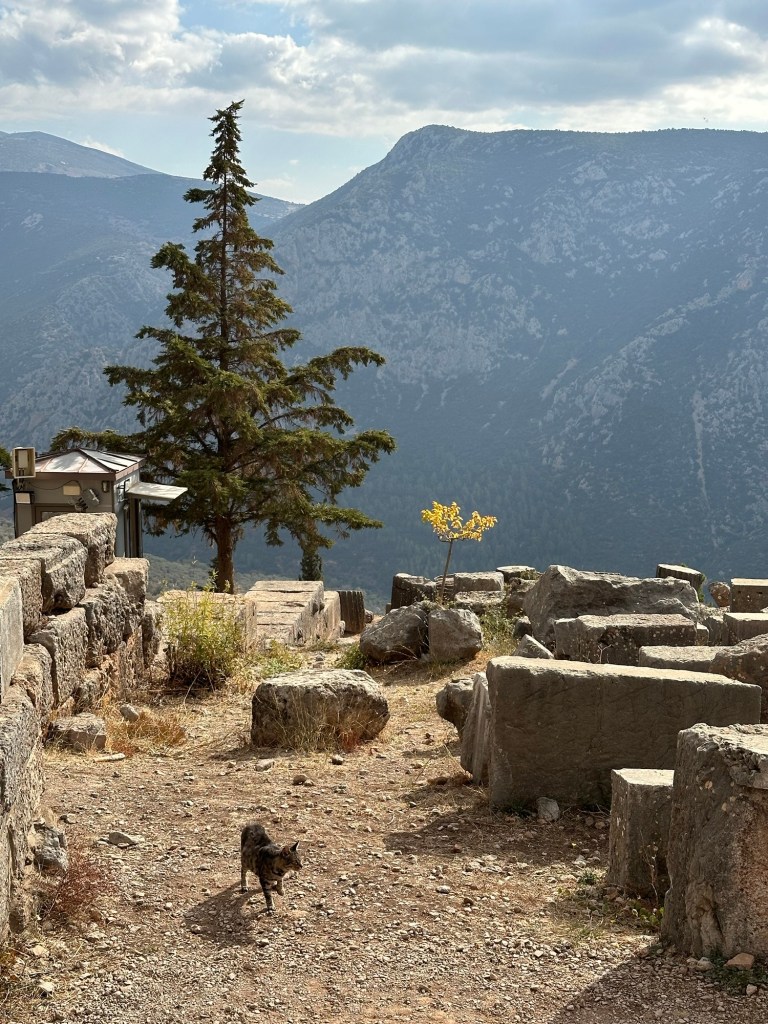
“Oracle-culture“ was a pay-per-interpretation of the divination of the gods, and as such a lot of ambiguity followed the pronouncements. If a prophesy was not taken kindly by the person asking for advice and interpretation, it could be reinterpreted in a manner to better suit the supplicant, but it was not a cheap date. It also led to some of the citizens ignoring completely the advice of Pythia, much to their detriment. Often the size of the donation would determine the clarity of the message, and all of this divination was complicated by the fact that Pythia only worked nine days of †he year.
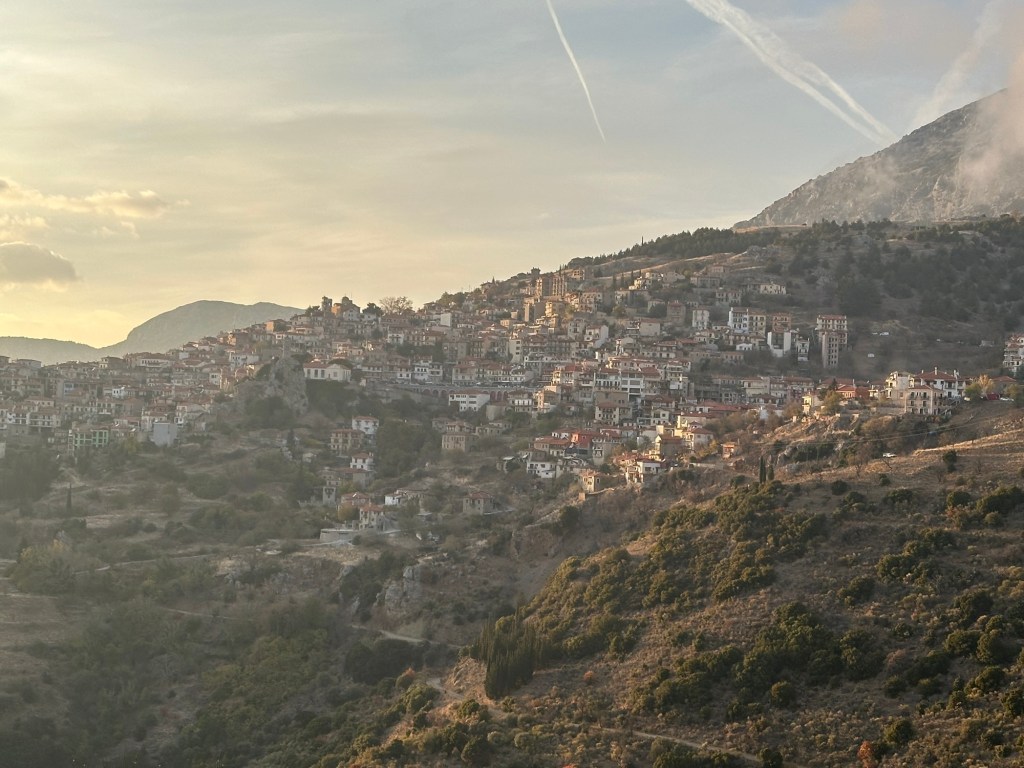
This whole journey was an epiphany for me…to be able to try to grasp the enormity of Ancient Greece, its myths, its history, its rise and fall is a challenge, rather a large one to tackle late in life. But the more I read to try to make a little sense of all that is out there for the purpose of a blog only leads down more rabbit holes…albeit fun ones to read about. And – there was one more God we were to be introduced to.

Way back during the battle for control of the universe Zeus and his siblings overcame the Titans ,and their next task was to divvy up the spoils. Zeus and his two brothers, Poseidon and Hades, drew lots – Zeus, the alpha male, was granted control over the heavens thus becoming the ruler of all Greek gods. Hades received the underworld where he would rule over the souls of the deceased. Poseidon was given the rivers and oceans, becoming the lord of the seas. Earth and Mt Olympus were to be shared by all the Gods and Goddesses.
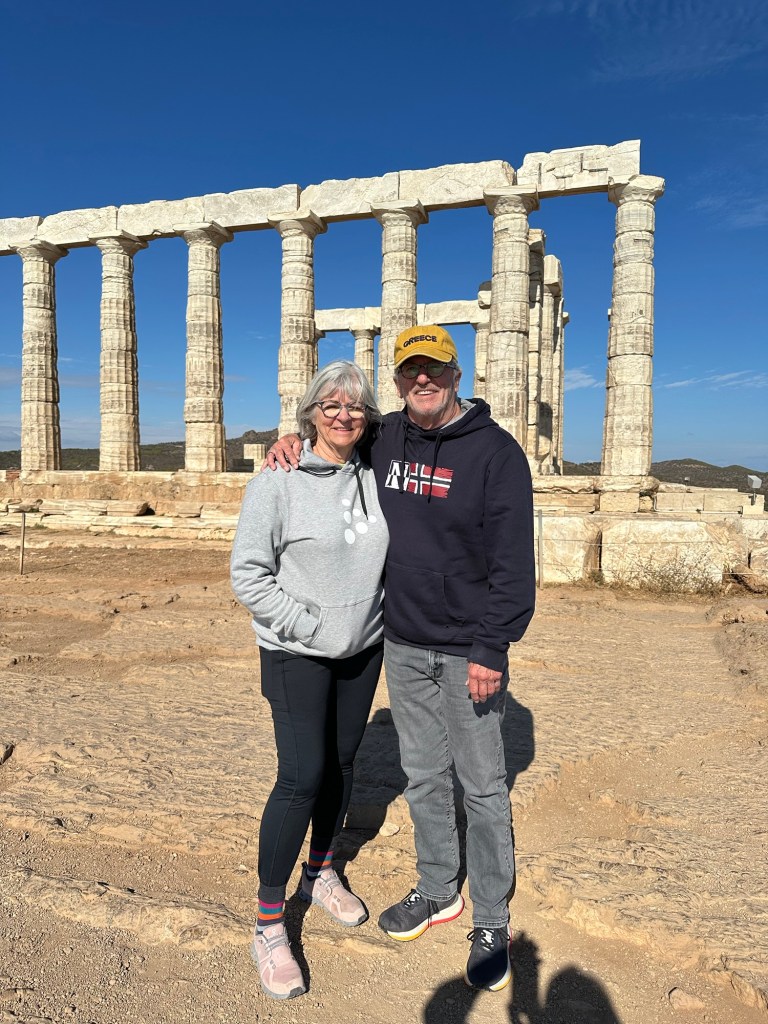
Poseidon was plenty strong just by being the God of water and the Sea, but he had other powers as well. In addition to ruling the oceans, seas and all the creatures living in them, he also had control over rivers, lakes and springs. He had a magical trident that could cause earthquakes, tsunamis and create springs and horses. He could also shapeshift into humans or animals at will. a frightening thought. Not only could he create earthquakes with his trident, he could also bring stability to the earth’s rotation, stabilizing it against his frequent tantrums. He could turn himself into different animals or humans…At one time, Poseidon had fallen hard for his sister Demeter. She wanted nothing to do with this madman of a brother and turned herself into a mare and hid among the horses to escape him. However, Poseidon happened to also be the god of horses and thus had no trouble finding her. To avoid detection by Demeter, he disguised himself as a stallion and captured her. The two equines mated and out of that union would come the horse Arion, a mythical black horse of enormous speed with the ability to speak. Arion would become an important personage in the evolution of greek mythology and history. Back to Demeter for a minute…she also had a fling with her older brother Zeus when the two shapeshifted themselves into serpents. From that union came the Goddess Persephone…who would become the wife of Hades. Following these family trees???
Poseidon could not only transform himself, he could transform others as well. He once courted a beauty named Theophane and in his effort to keep her away from her potential many suitors, he transformed her into a sheep, and himself into a ram, and out of that union came a golden-fleeced ram which would be sacrificed and would become the constellation Ares.
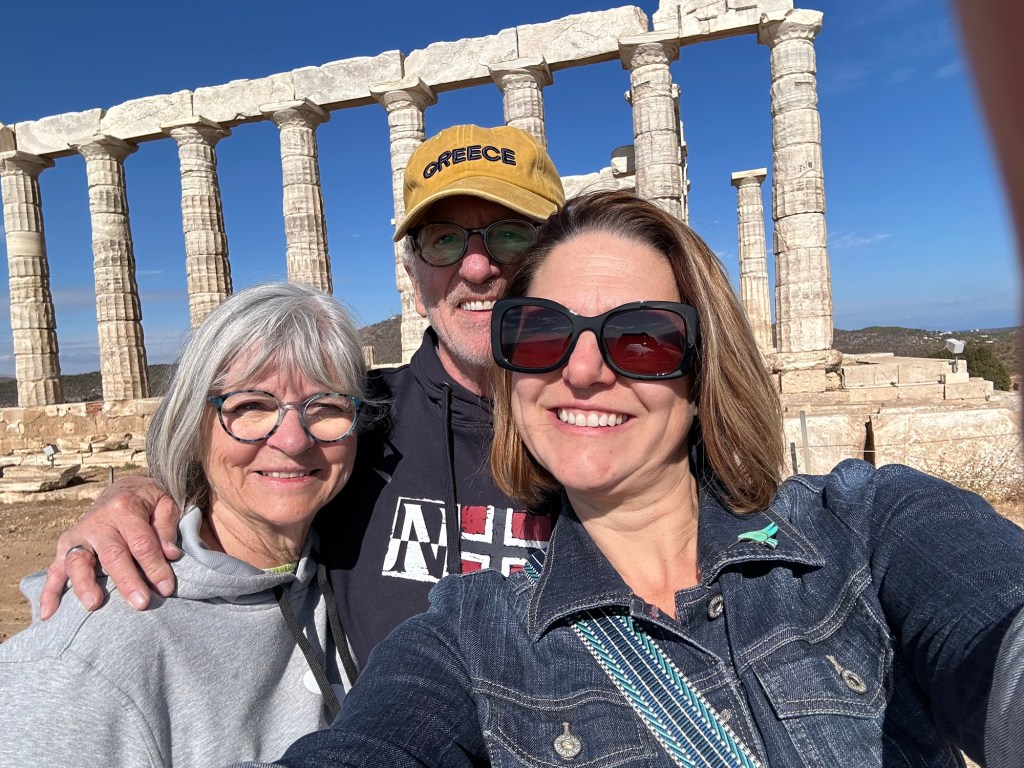
Like Zeus, and many other gods and mortals, Poseiodon had a host of lovers and affairs, some mutual encounters and some not so mutual. His official wife was Amphatrite whom he met in Naxos while she was dancing with her sisters. While he was genuinely smitten with her, she was not so enamored and fled , only to be returned by a dolphin who had been dispatched by Poseidon to pursue her and persuade her to return. She did and became his queen and a beloved mother figure to seals, dolphins and some sea monsters. As a reward Poseidon had a constellation named for the dolphin – Delphinus.
The saga of Demeter was chronicled above, but another of Poseidon’ s affairs was with Aphrodite, goddess of love and beauty, pleasure and procreation, who also counted among her conquests Hermes, God of all Trades, Dionysos, God of Wine and Revelry, and Ares, the ancient greek god of war, who was her true lovemate. Aphrodite is considered by some to be the daughter of Cronus, Second Generation God and a Titan, father of Zeus and other gods. Myth, lore, fact…Cronus was the son of Uranus and Gaia…Cronus didn’t like how Uranus treated his mother, so he castrated him and threw his genitals into the sea, causing the sea to foam. Out of this foam grew a beautiful woman who stepped onto the sands of the island of Cyprus, grass springing from beneath her feet, and grew to be beloved by all. She calmed the seas, caused the meadows to flower and storms to abate. And for mankind to fall in love with her endlessly and hopelessly. Aphrodite.

Not the last or the least of Poseidon’s lovers was Medusa, a mortal, who was once a beautiful priestess of Athena’s. Raped by Poseidon in one of Athena’s temples, Medusa was to become regarded as one of the first cases of victim blaming. Athena couldn’t punish her brother, so she blamed Medusa and turned her and her sisters into Gorgons. Her fate was to have a head of hair filled with snakes. Perseus, a son of Zeus by a mistress named Danae, went to behead Medusa so he could use her powers to turn men to stone on a man who wished to marry his mother. Most of the Olympians, foremost among them Athena, threw their support to Perseus. He succeeded in murdering Medusa while she was pregnant with Poseidon’s children, Pegasus, a winged horse, and Chrysaor, a giant wielding a golden sword.
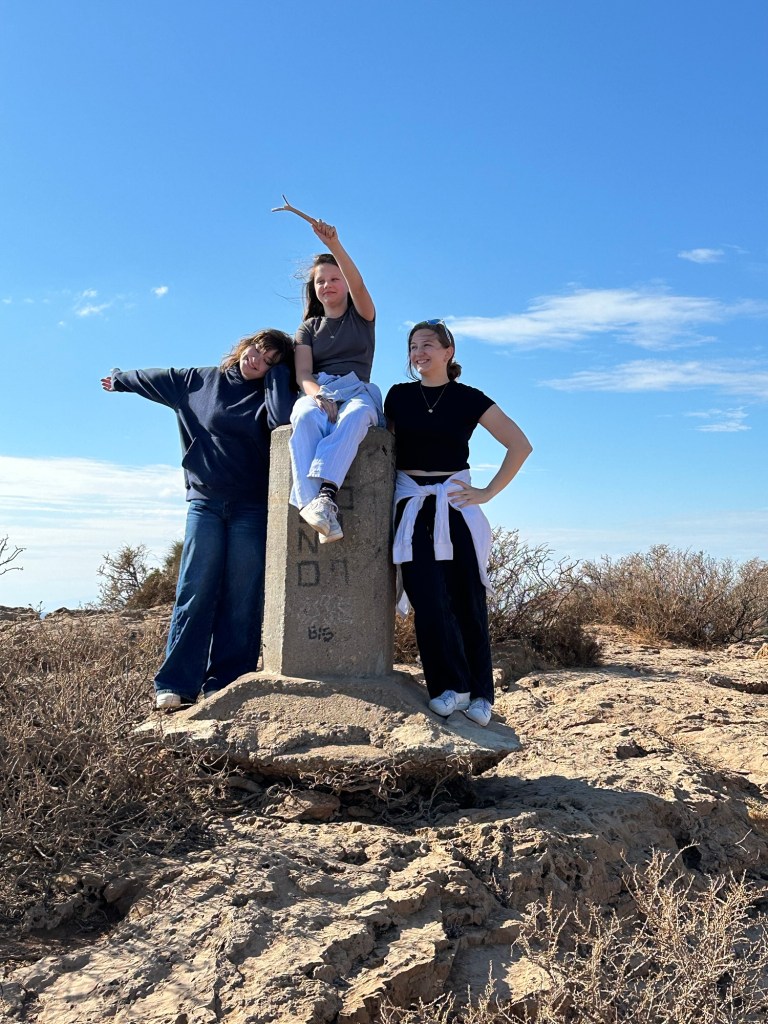
We barely scraped the surface of this history of an ancient civilization, one replete with unlikely but highly entertaining myths, a country that has the monuments and remnants of centuries of a population that at one time ruled a vast majority of this world. It is the cradle of philosophy, of theater and of religion. Athens is a beautiful city incorporating a modern look and vibe with a heritage of mortal and immortal personages. A great place to visit.

When thinking about Greek food any number of recipes come to mind to pass on to my readers….Gyros – great street food. Avgolemono soup – a really tasty Greek lemon chicken soup. A couple of desserts to ponder – traditional baklava with walnuts and honey, or, Portokalopita (literally means orange pastry), a traditional Greek cake made with phyllo soaked in cold syrup infused with orange flavors. Reeeealllly good! Or moussaka, made with layers of tender roasted eggplant with ground lamb and a bechamel topping. Love eggplant but it doesn’t like me. So, pastitsio is the recipe of choice today. A kissing cousin to moussaka without the eggplant, pastitsio is made with layers of pasta such as buccatini and cinnamon-spiked ground beef topped with a rich bechamel topping. Enjoy!


 the wooden spoon - a travel/photo blog
Leave a reply to jrawson47 Cancel reply