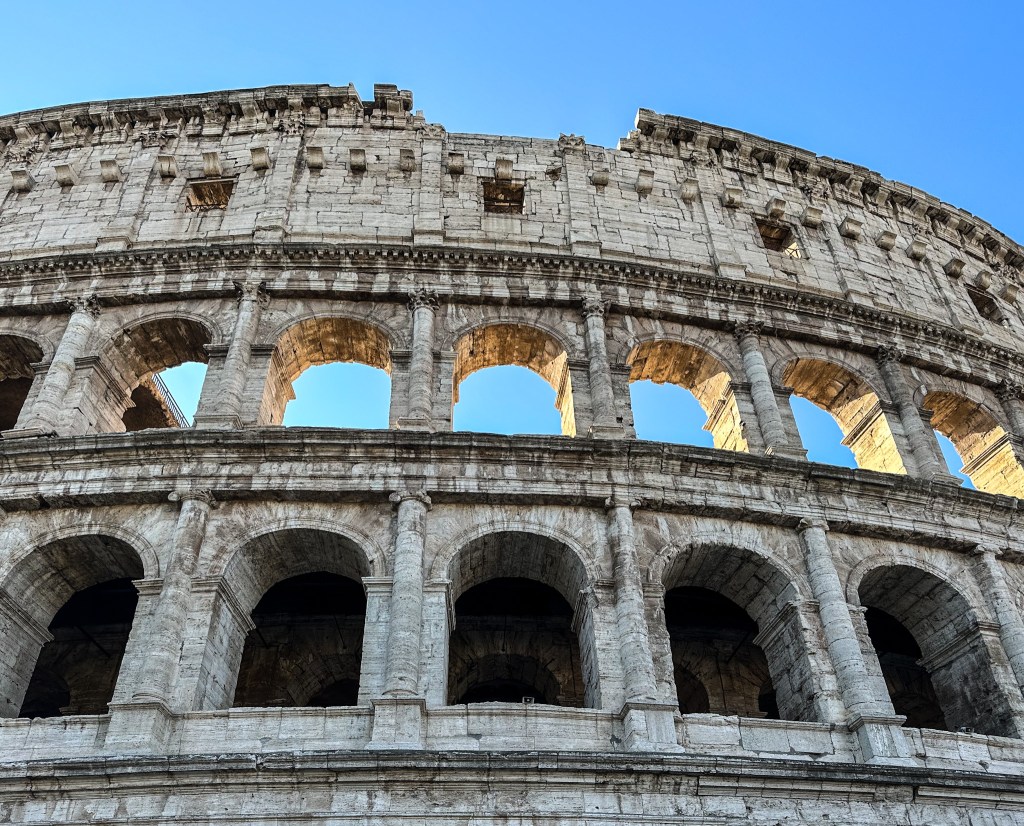
I was in Rome for a four day weekend at the end of September, ostensibly to watch the USA team at the Ryder Cup, but really there to fulfill a fantasy of mine – to eat the four famous pastas of Rome: Pasta alla Cabonara, Pasta alla Gricia, Pasta Amatriciana, and Cacio e Pepe. Oh, and maybe try to squeeze in a little culture and history at the same time – which as it turns out, was not such an easy proposition. I met my son Rob and his father in law Bob, neither of whom had ever been to Rome. It had been some thirty years since I had last been there, fulfilling another dream of guaranteeing my return by throwing the proverbial coin into the Trevi fountain. More on that later.
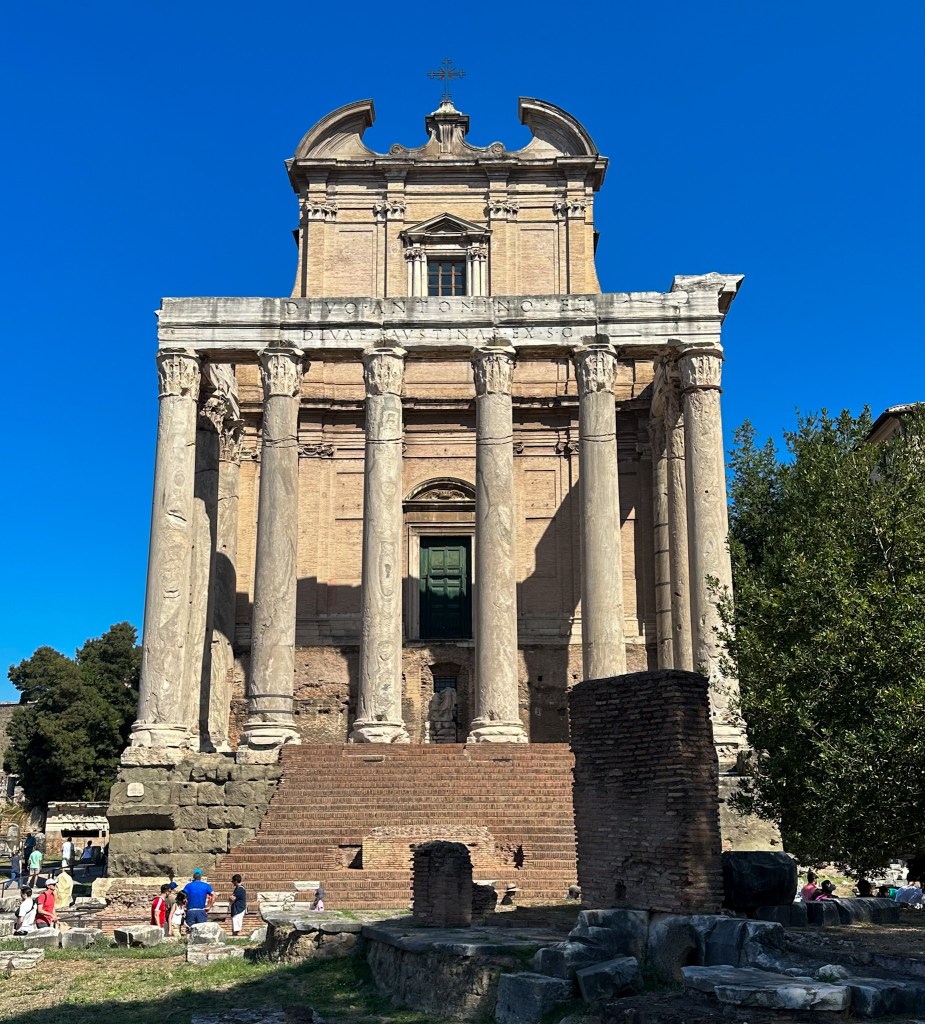
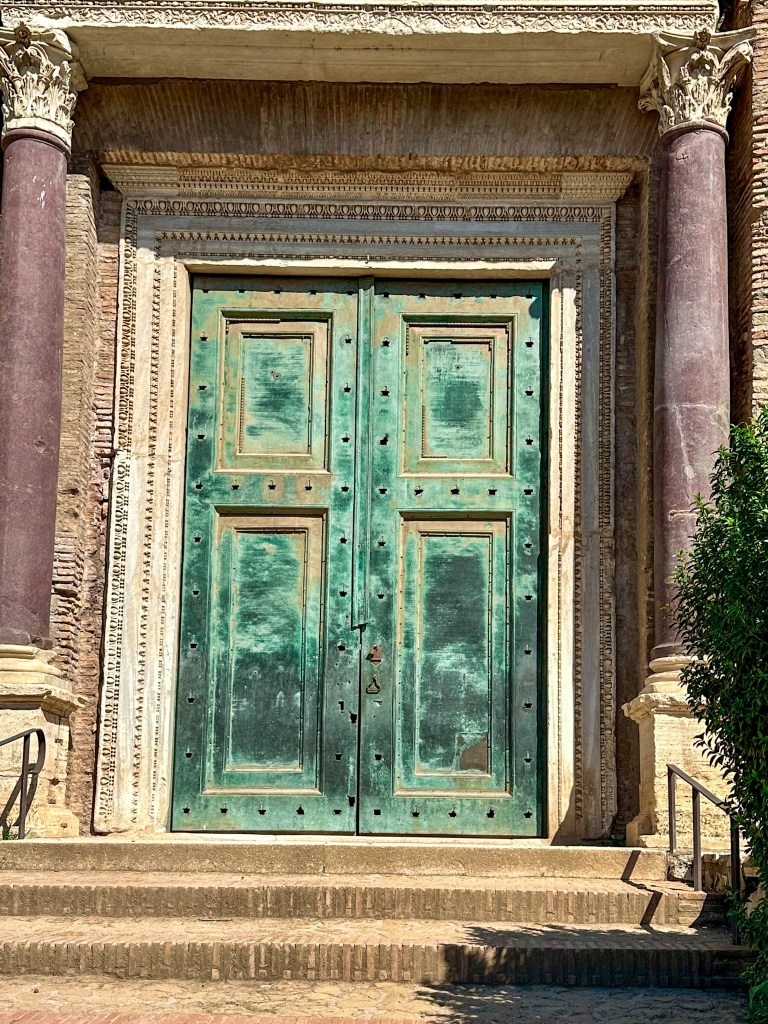
I was the appointed tour guide for the four days we were in Rome, one of those days was dedicated to the Ryder Cup and the other two free days to see Rome. Hah! I jotted down a list of what we should see, just the basics, and quickly decided that wasn’t going to happen. So perhaps just a few of the basics, just enough to whet my companions’ appetites for a return some day and maybe get to eat the four pastas that Rome is famous for.
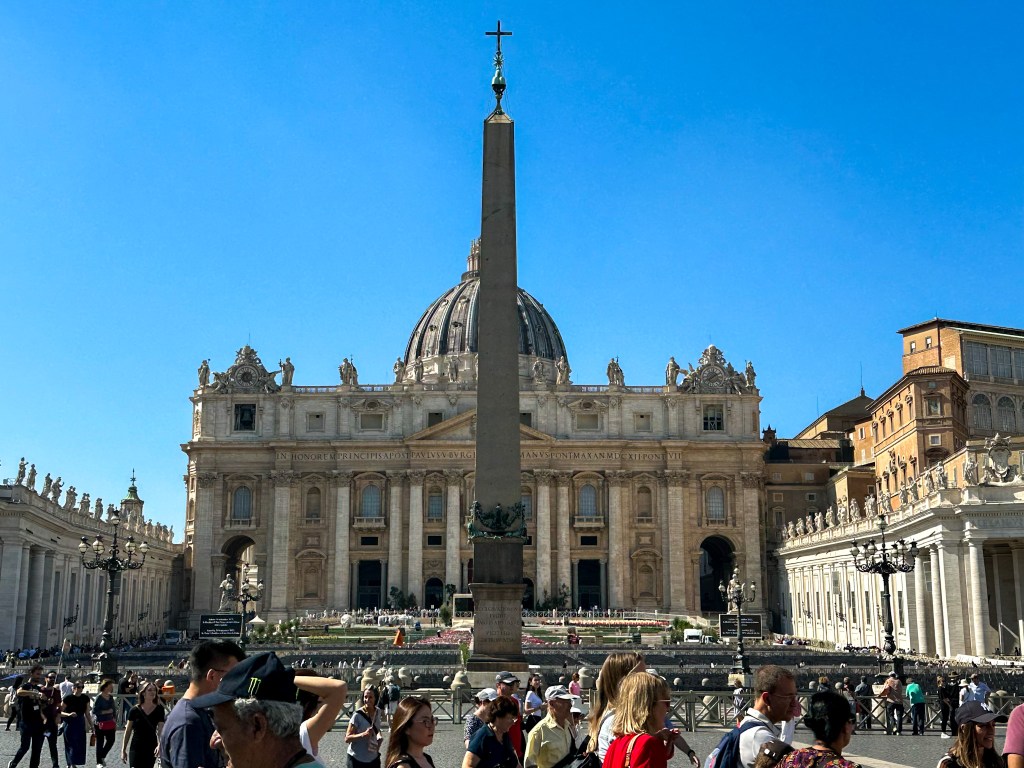
I underestimated the crowds, severely. Apparently over the last thirty years tourist travel to Rome and other popular cities has grown to where it is a year-long love fest. I mean, it was stupid crowded. The first night we shamelessly walked into a nearby trattoria only to be rather rudely turned away for lack of a reservation. And it was like that breakfast, lunch and dinner. The Ryder Cup drew a certain number of people for sure, but not to the like of those numbers.
The most famous of the four pastas, though not necessarily the best (a matter of taste) is Pasta alla Carbonara. Despite a lineage that dates back as far as the fourth century, wheat and flour etc, Carbonara, and the other Roman pastas, really gained popularity after the Second World War, both among Romans and the rest of the world. Myths that it was invented by the carbonaro (coal mine workers) in the Apennines is debunked as highly unlikely as the coal workers rarely had time to do anything but work the coal mines.
Another source traces its origin back to 1839 in Naples where a similar dish was chronicled – pasta tossed with melted lard, beaten raw eggs, and a hard cheese. Possible as the three core ingredients found in the Roman pastas include guanciale (pancetta), pepper and a hard cheese, usually pecorino romano. Another story has it traced to the Allied liberation of Rome in 1944 when the American GI’s would bring their daily rations of bacon and powdered eggs to the local restauranteurs who obligingly whipped up meals that were somewhat different from the usual fare supplied by the line cooks of the army. First reviewed by La Stampa (a daily newspaper out of Turin) in 1950, the popularity of Carbonara has soared over the years. There are, of course, many variations to the dish, but the recipe enclosed from my brother Michael who lived in Rome back in the middle and latter years of the 20th century is the one that has been passed around our family for some three generations and counting. The first download is the recipe that was developed by the Cucina Italiana people and is regarded by the purists as the original. Not too shabby either. Enjoy.
Pasta alla Gricia is the oldest of the four Roman pastas, and the purest, made with only the four classic ingredients – pasta, guanciale (or pancetta), pepper and pecorino romano. The local shepherds of Grisciano , a small town in the Lazio district of Rome, are often credited as the originators of pasta alla gricia. Limited in their selection of supplies, making this dish was an easy option.
Another story has the source as coming from the Grici who were local breadmakers, also poor and of limited resources and who relied on those core ingredients. Whatever the source, pasta alla gricia is the basis for the other three Roman pastas.
Pasta alla Amatriciana is a kissing cousin to Pasta alla Gricia. The heresy here is that while it does include the staples: pasta, pecorino, guanciale and pepper, it does also add tomatoes. A no-no for the purists. However its history will show how it became a Roman fave. Cliff notes: Amatrice was a neighboring town of Grisciano, alleged home of pasta alla gricia, which was burned to the ground in 1529 by Spanish invaders. Survivors fled to the kingdom of Naples where they were warmly embraced by the locals, not only for their character but also for the menus and cooking traditions they brought with them. At that time Neapolitans were experimenting with adding the heretofore ineligible tomato to many dishes. Considered too acidic for consumption for centuries, the Amatricians gleefully added the fruit to their pasta gricia and thus was launched the latest classic Roman pasta. As you see in the recipe, several “cardinal” rules have been broken, but accepted; eyes turn the other way when the wine and pepper and San Marzano tomatoes are introduced. Enjoy this one!
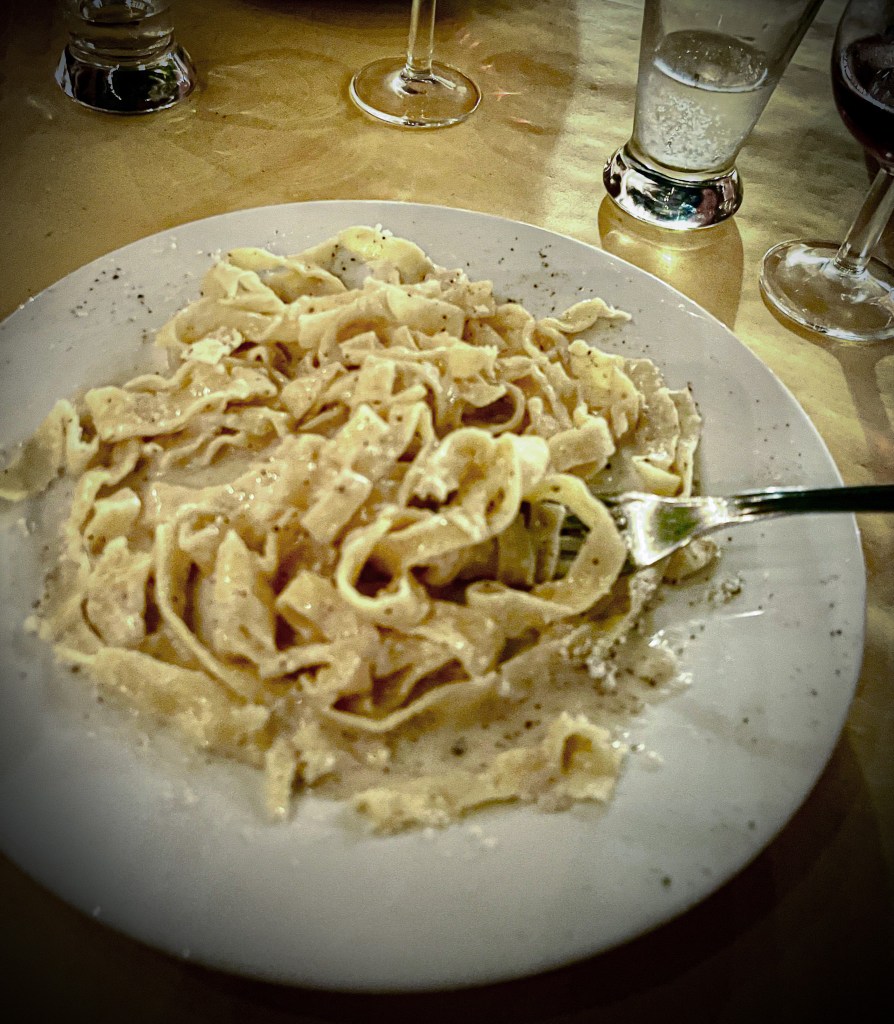
And then, there is cacio e pepe. The simplest of the four pastas, it calls for a pasta, pecorino romano and pepper, lots of it. Most every restaurant in Rome has it on its menu, and the popularity of the dish is world wide with some chefs admitting to adaptations while others claim to be the original. As far as I can tell the recipe below is as original as it gets.
The history of the pasta originated with the annual seasonal moving of livestock by shepherds. They couldn’t pack much and were thus limited to provisions that were long-lasting. In addition to some dried tomatoes and guanciale, an aged cheese would last long enough, a dried spaghetti also would, a sack of black peppercorns had sustainability and water to boil was not a problem. Thus was America’s “mac and cheese” created, and many other versions as well around the world, but to get the “original” and arguably the best, you must go to Roma Sparita in Rome where Anthony Bourdain said it was the world’s best pasta dish. During a filming of an episode for his series No Reservations, which was done in black and white as homage to Rome’s cinema history, he claimed that “we can’t tell anyone where this (place) is. We can’t f… this up.” He rhapsodizes on…”In order to enjoy this meal what would I be willing to sacrifice from my past?” “The first thing to go would be a Jefferson Airplane concert. Definitely the Jefferson Airplane concert at Forest Hills.” Then he mentions a few hallucinatory experiences…”My third, fifth, seventh and ninth acid trips.” He immediately dovetails into the world of literature…“The Catcher in the Rye. Yeah. Definitely overrated.” And then this…. “My first sexual experience. Definitely out the window. But the second one, no. That was a good one.”
We didn’t make it to Roma Sparita, but we did find a great little outdoor trattoria not far from where we were staying where we all had the Cacio e Pepe. Easy. No brainer. And outstanding!
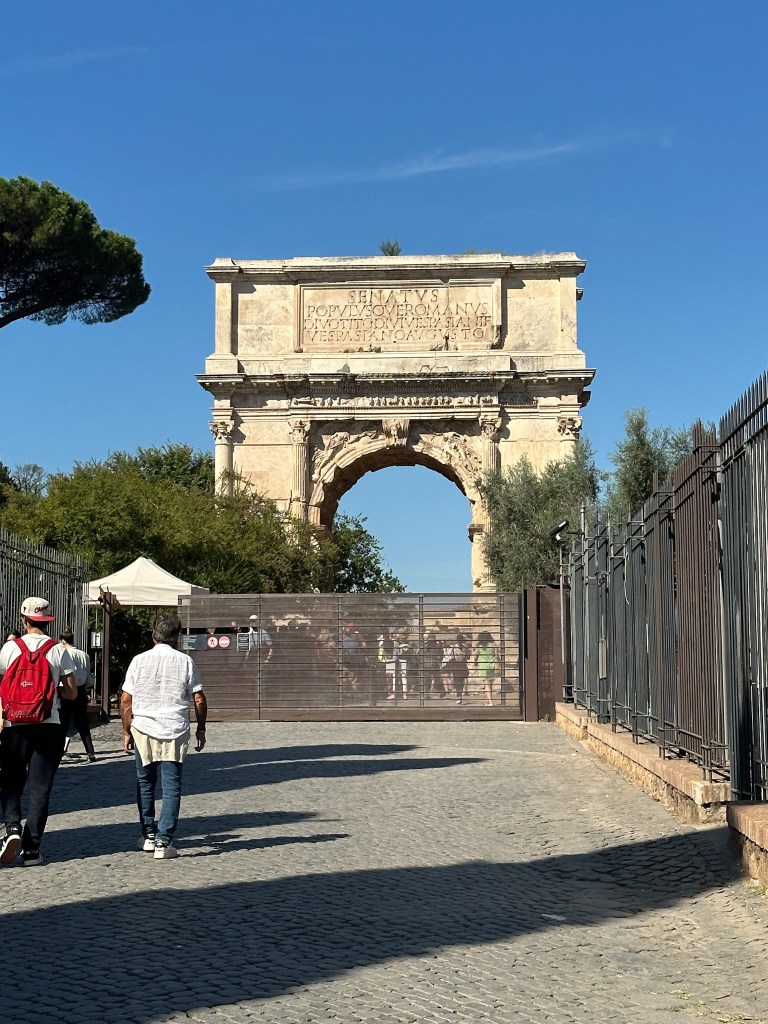
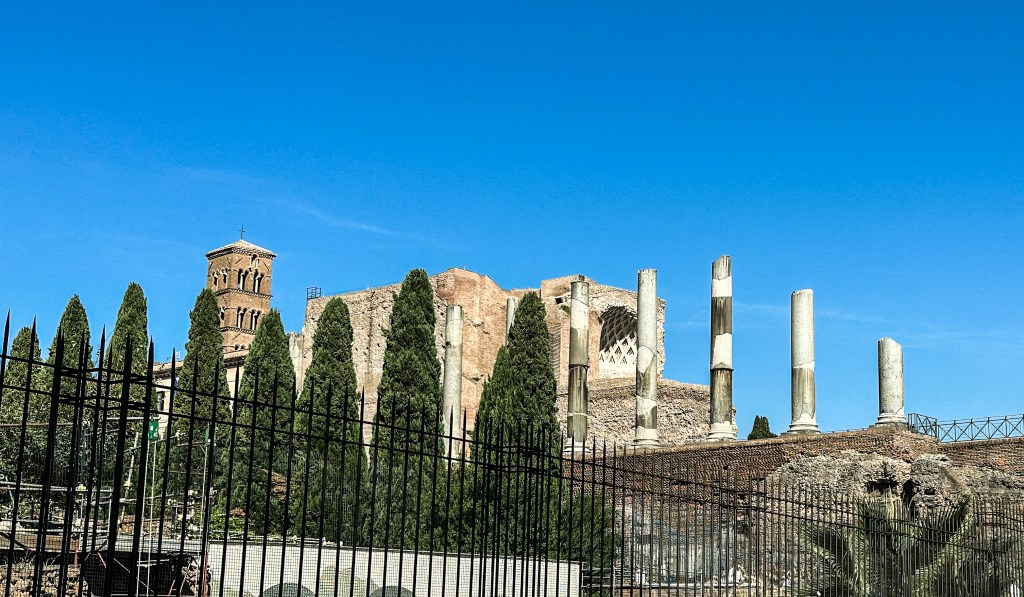
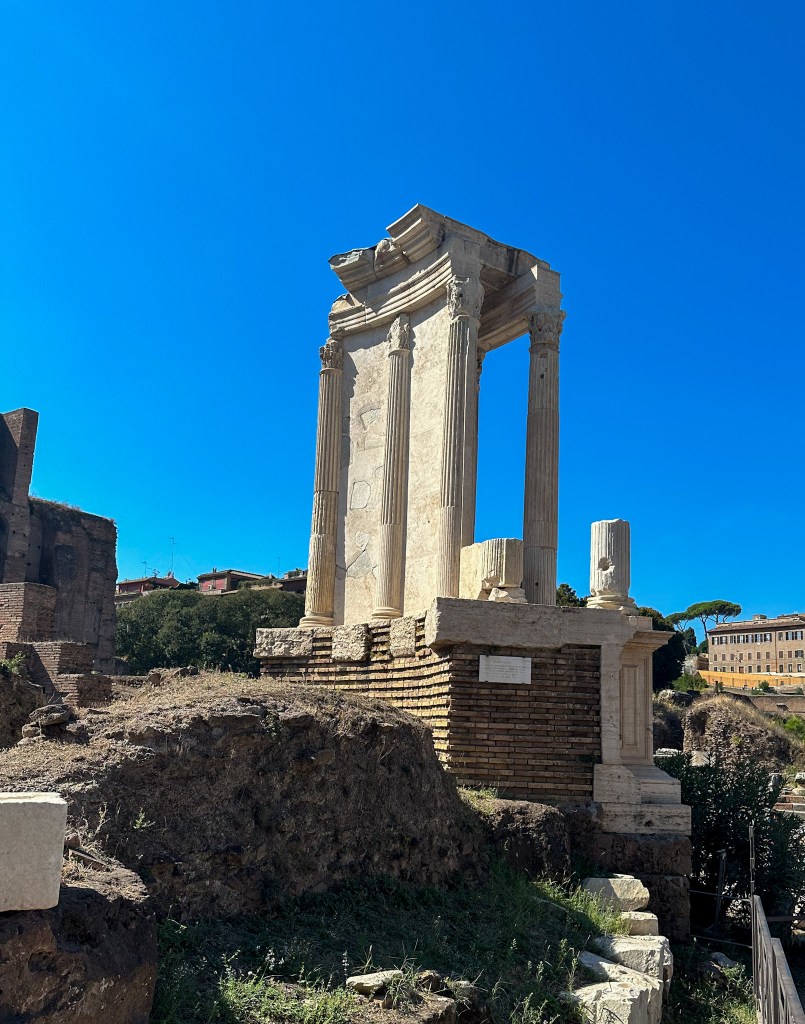
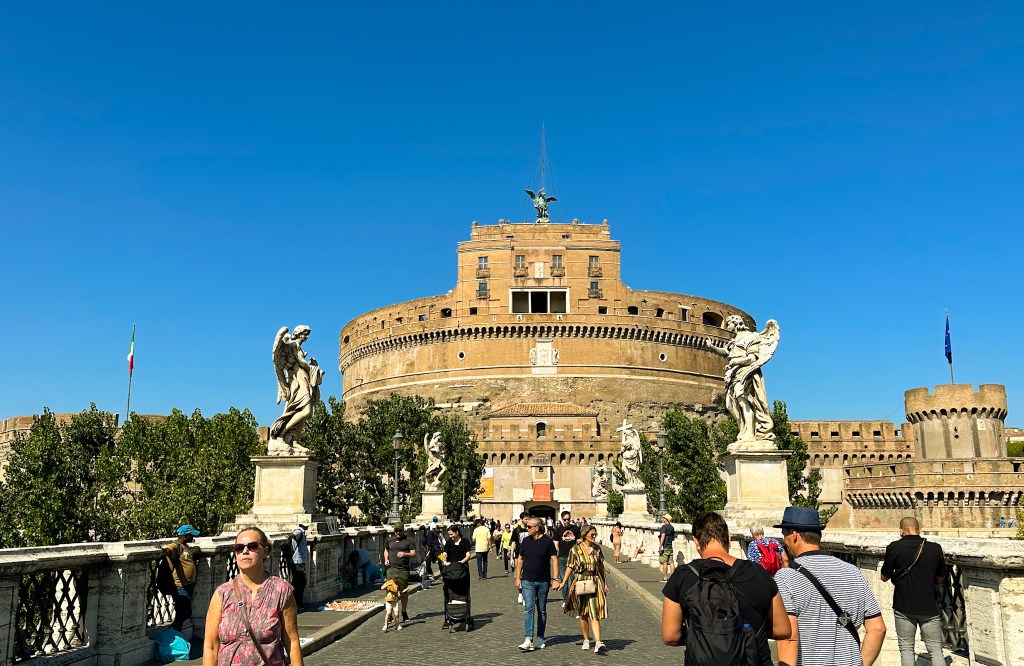
Here are a few more pictures…unrelated to pasta..
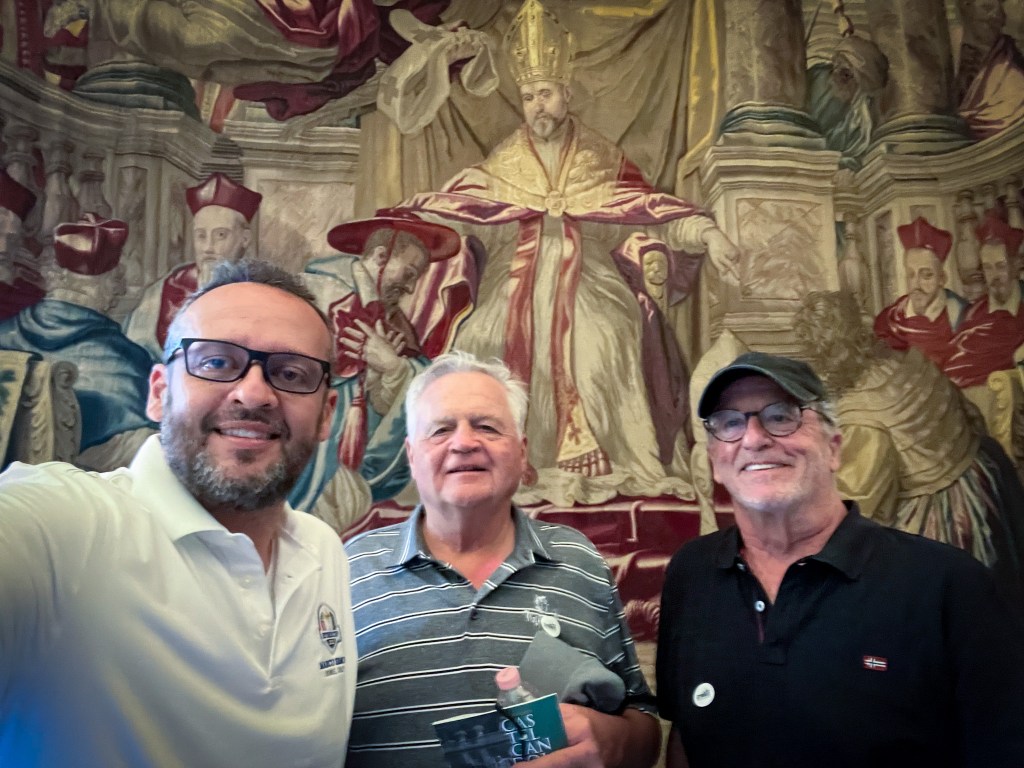
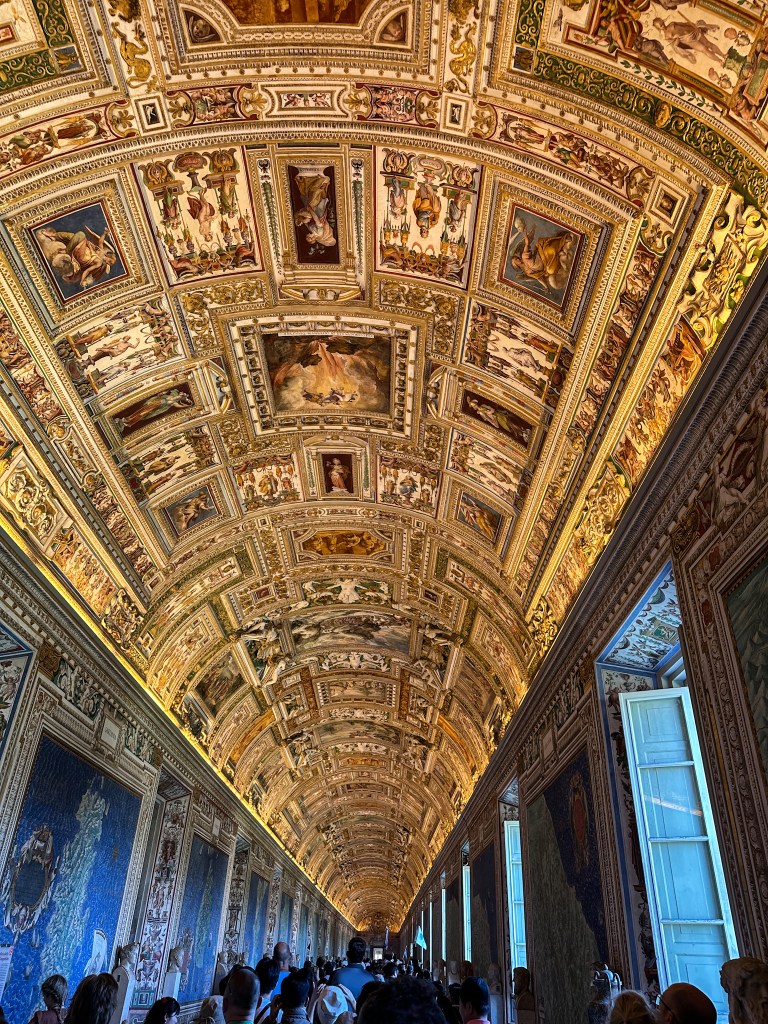
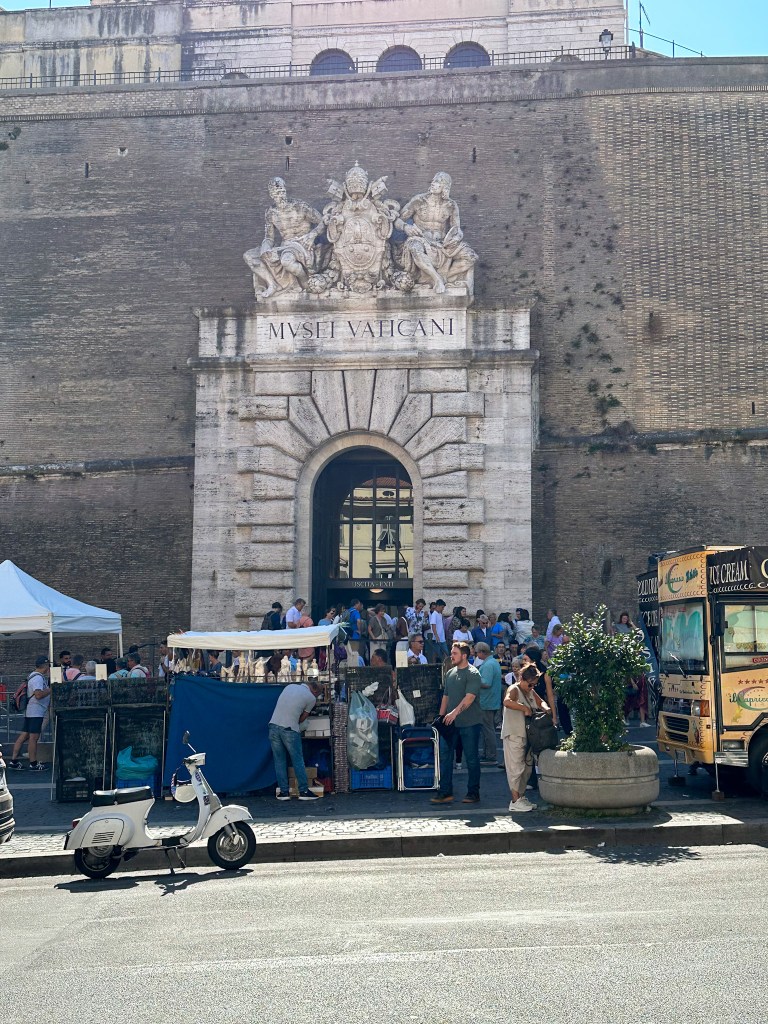
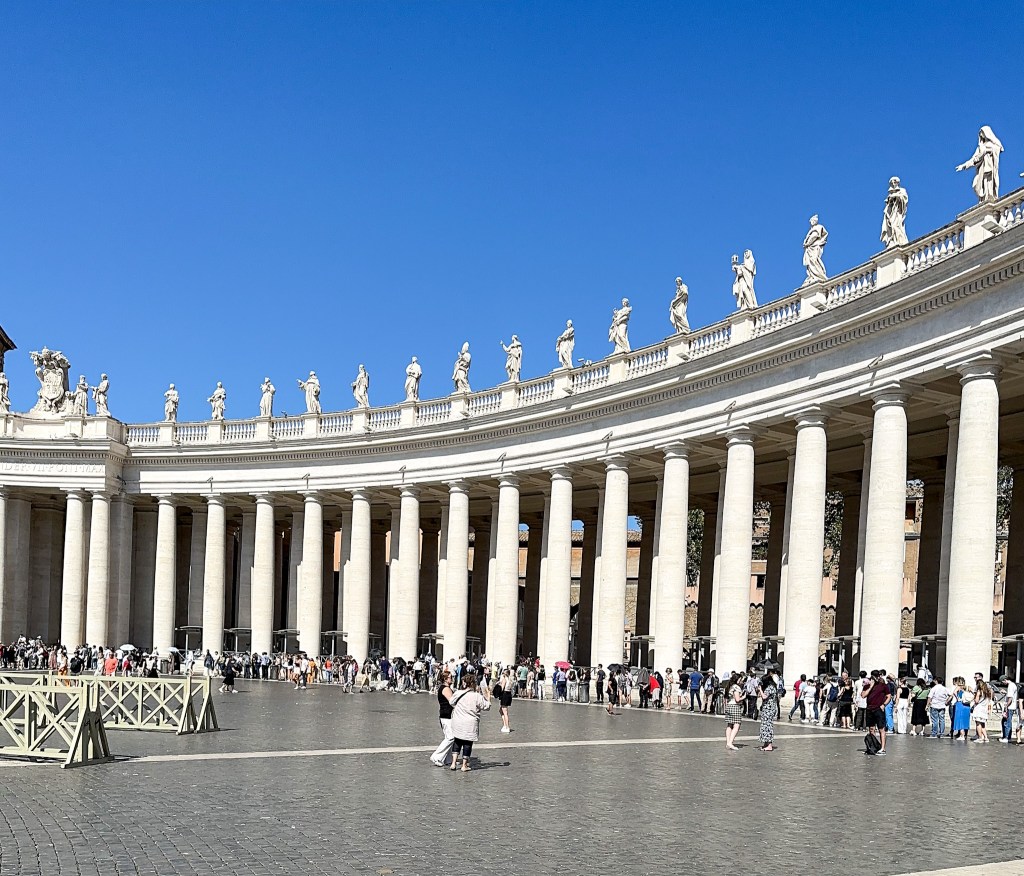
The Vatican was a zoo…unbelievable lines to get in and then shoulder to shoulder strolls through the various rooms with the Sistine Chapel the ultimate goal. No pictures allowed there but it was worth the crowd and lines. Such history.
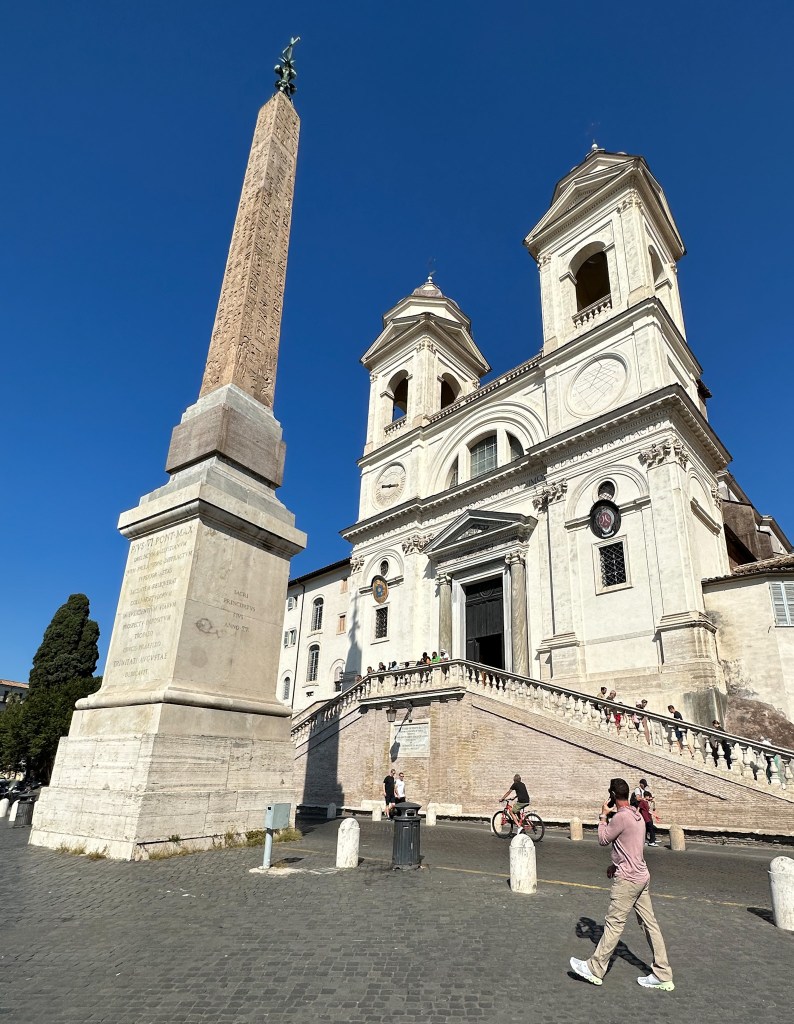
At the top of the Spanish steps is the Trinità dei Monti church. Built on land owned by the French the church was commissioned in 1594 and remains today the property of the French church with masses being conducted in French.
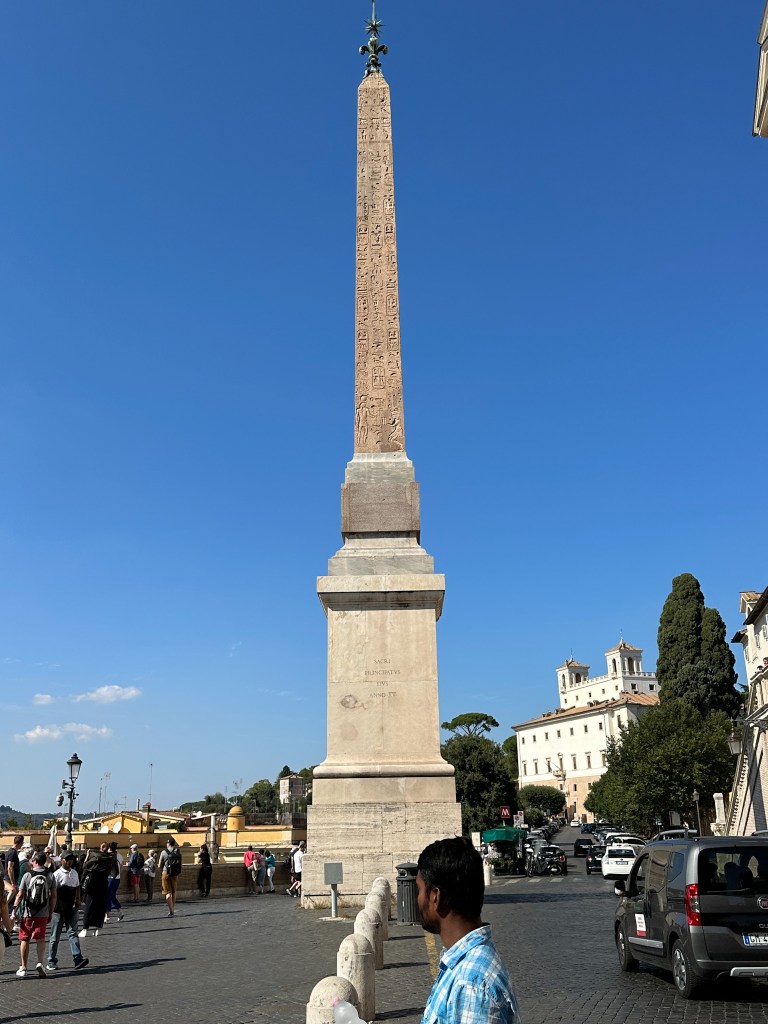
The obelisk in front of the church is of Roman heritage, most likely from the second century. Originally located in the Gardens of Sallustian, it laid broken in three pieces and neglected until Pope Pius VI in 1789 commissioned it to be moved and restored to its current location. A rather inferior obelisk compared to others in Rome, its photo value is enhanced solely because of its location.
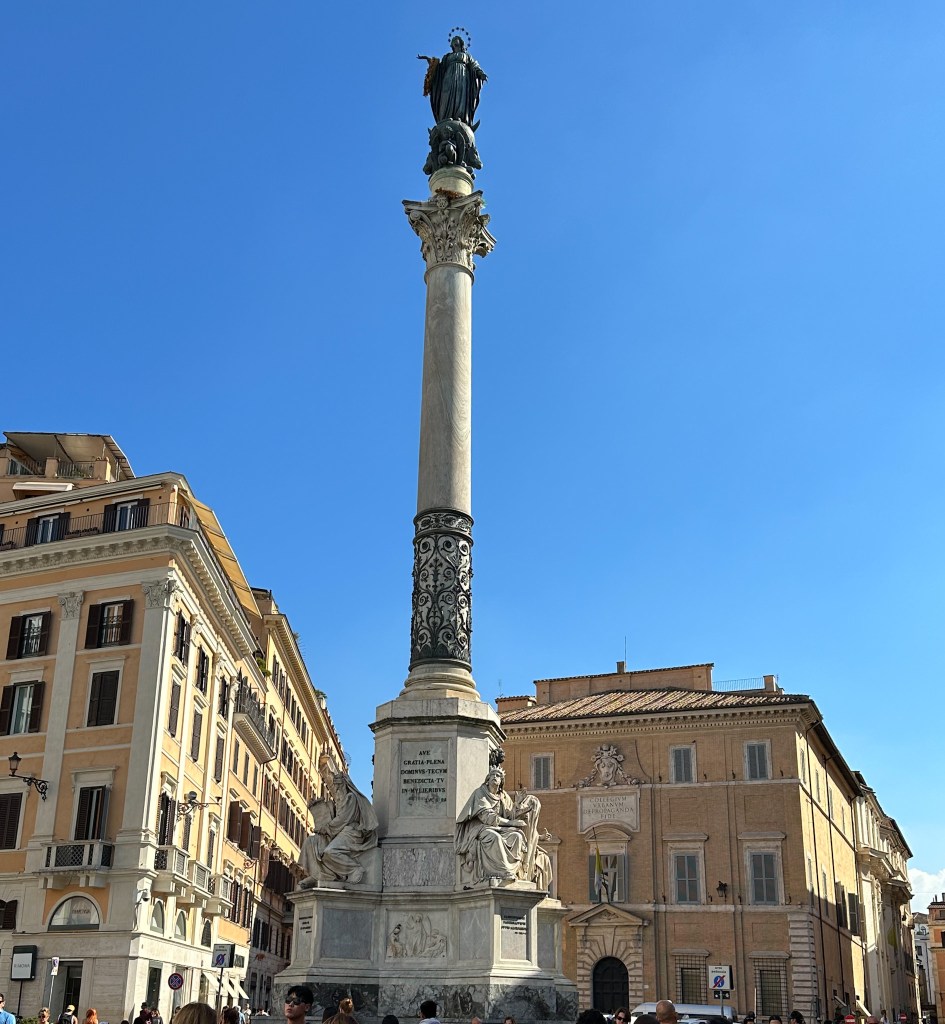
Located in the Piazza di Mignanelli, just adjacent to the Piazza di Spagna and the Spanish Steps, the Column of the Immaculate Conception was dedicated in 1857. The base is of marble with four statues on each corner depicting Moses, Isiah, David and Ezekiel. The column stands 39 feet tall, was constructed in ancient Rome and only rediscovered in 1777 as a new church (Santa Maria della Concezione. The top of the column shows the Virgin Mary stomping a serpent, the symbol of original sin, a cornerstone dogma of the Catholic Church.
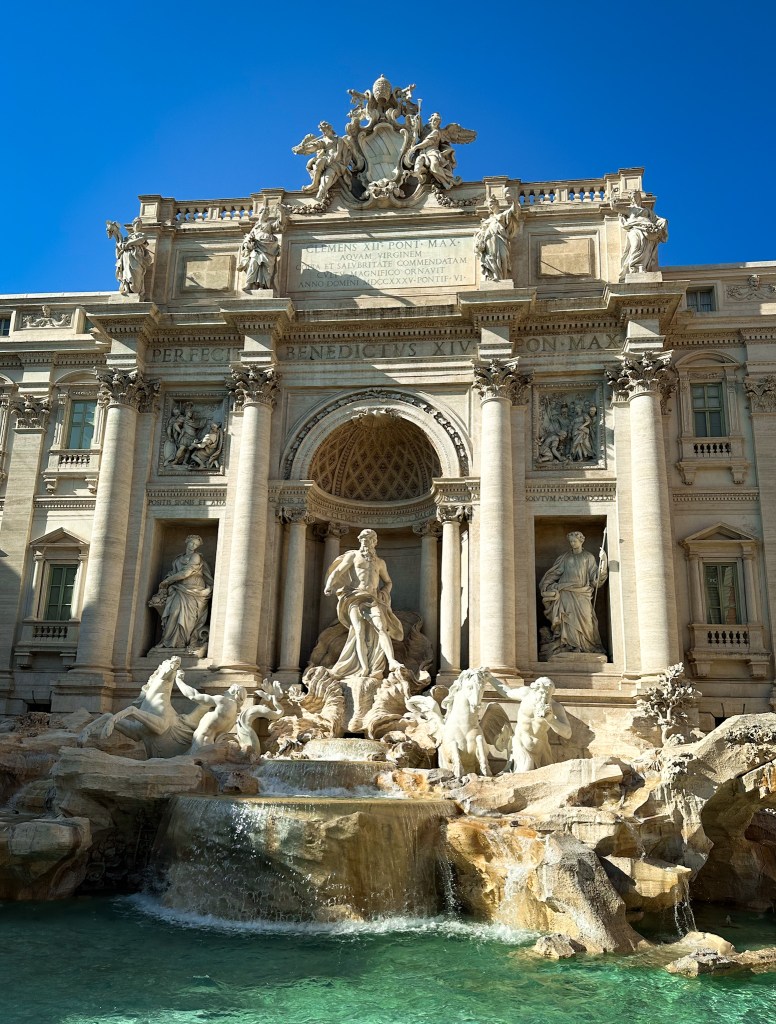
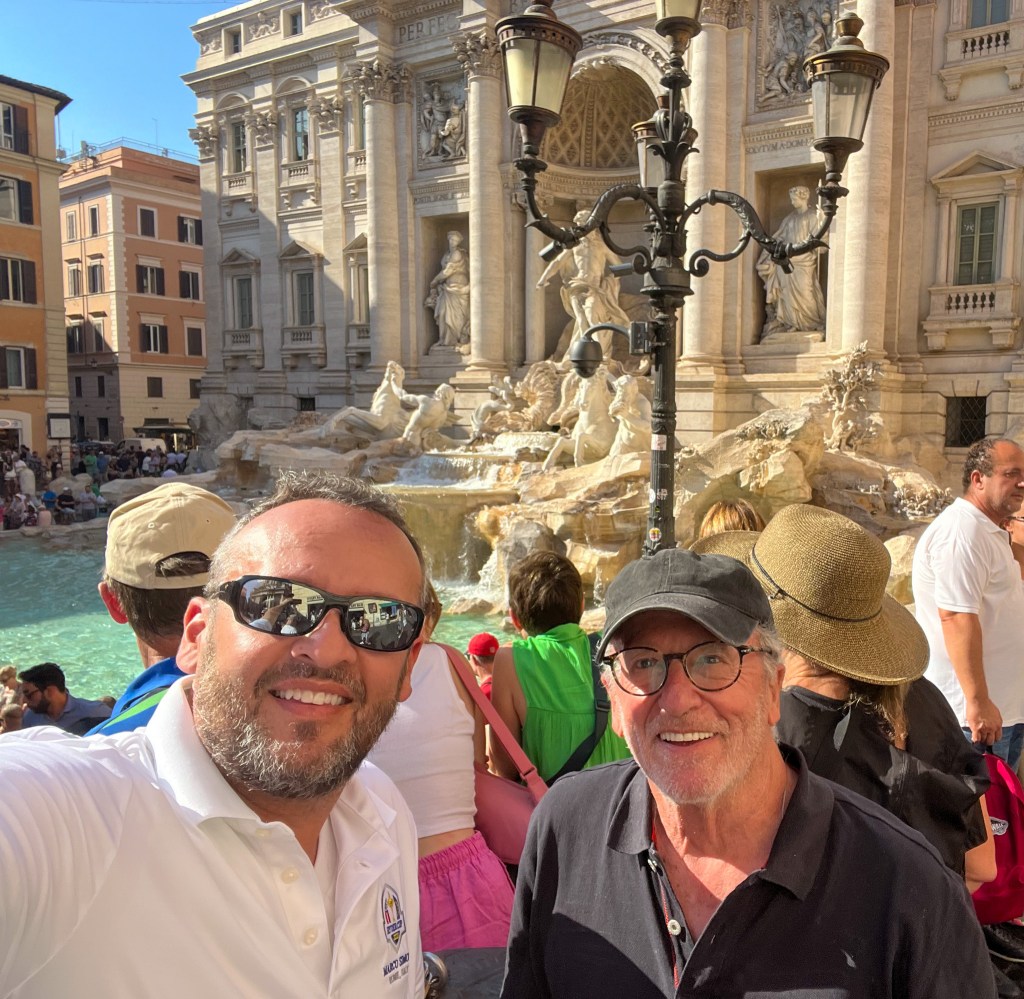
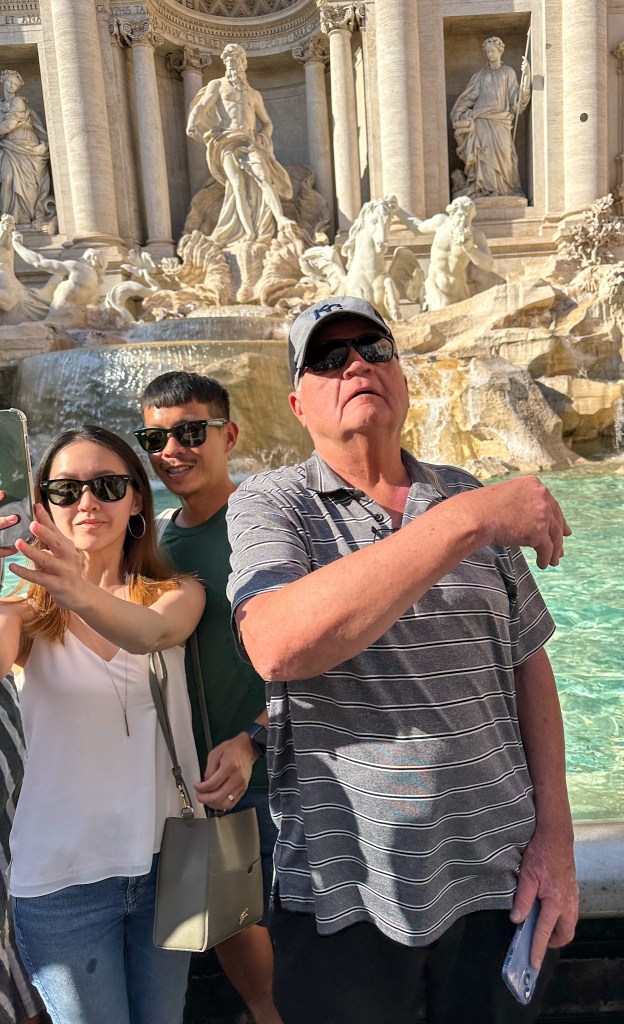
If not all of the population in Rome that weekend was either at the Ryder Cup, the Vatican or St Peter’s, then they were at the Trevi Fountain. Maneuvering around the square was like being in the mosh pit at a U2 concert, Insane!.
The fountain‘s history dates back to Ancient Rome and the construction of the Aqua Virgo Aqueduct which provided water to all of the fountains and baths of Rome which even back then numbered well over a thousand.
There are three ways to navigate your way to the Trevi Fountain. The Via de Crocicchi, the Via Della Maratte and the Via Poli are three quite narrow and unremarkable streets that conjoin in the Piazza Poli and the Trevi Fountain, a magnificent baroque piece of architecture that has drawn visitors since its completion in 1762.
The Trevi fountain might be the number one draw in Rome, despite stiff competition from the Vatican, St Peter‘s Basilica and the Coliseum. As you enter the piazza the focus of your attention is immediately drawn to the statues in the middle of the fountain made of Carrara marble, and then to the entire fountain carved out of travertine stone, and then to the overwhelming numbers of people crowded around the fountain. It‘s a place for everyone…the young couple who drink from the small basin adjacent to the fountain, the fountain of lovers, who by drinking the water ensure they will stay in love forever and remain faithful forever the one to the other. There are the older couples who are returning to Rome, thereby fulfilling the prophecy of the coin tosses. One coin thrown by the right hand over the left shoulder will ensure a return to Rome. Additionally, two coins tossed in the same manner by a single person will lead to a love affair with a Roman, and three coins means a marriage to that same person. Not always are all three coins thrown…
Adding to the charm and mystique of the fountain are the number of movies and tv shows that have been shot there, three of which are classics. One of the most famous films is La Dolce Vita where Anita Ekberg jumps in to the fountain clothed in a long black evening dress and alluringly beckons Marcello Mastroianni to follow her. The throwing of the coins was additionally celebrated in the film Three Coins in the Fountain, a story about three women living and working in Rome, looking for love.
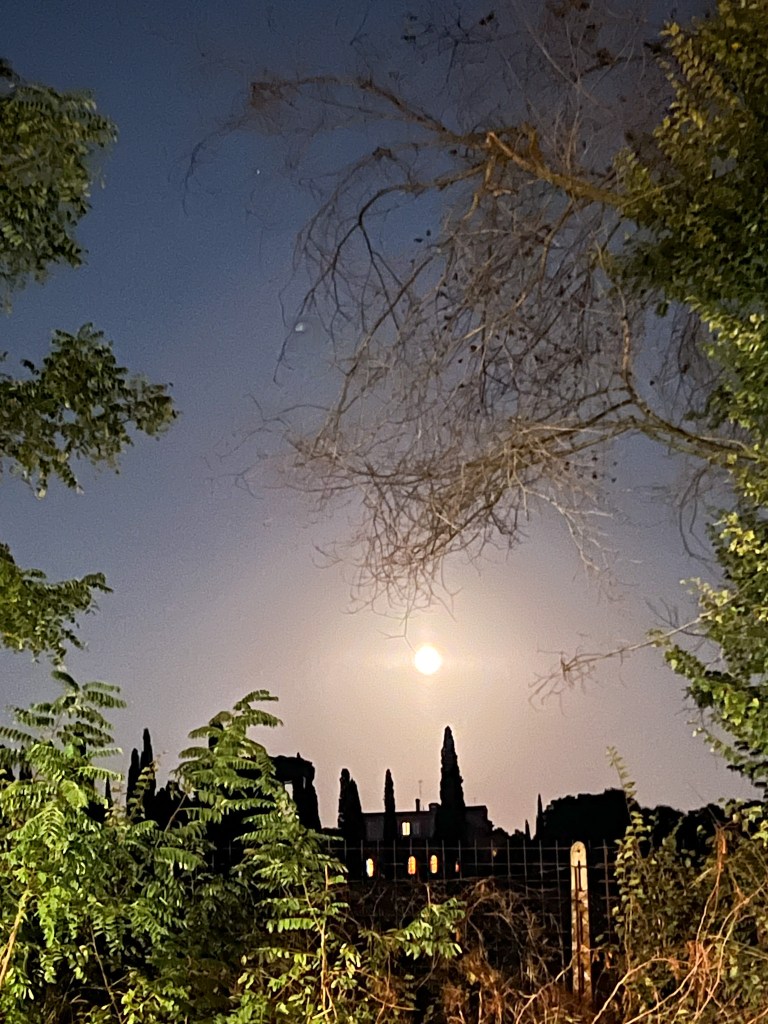
As I finish this blog rather appropriately on Halloween Eve I put up this photo of the catacombs. We stayed in an AirBnb a little distance from the center of town, right by the walls surrounding the Catacombs and in a full moon which threw a magnificent lighting. A great trip to the Eternal City, and yes, I did throw a coin over the left shoulder with the wish that it will not be another 30 years before my return…

 the wooden spoon - a travel/photo blog
Leave a reply to Pat Cancel reply